
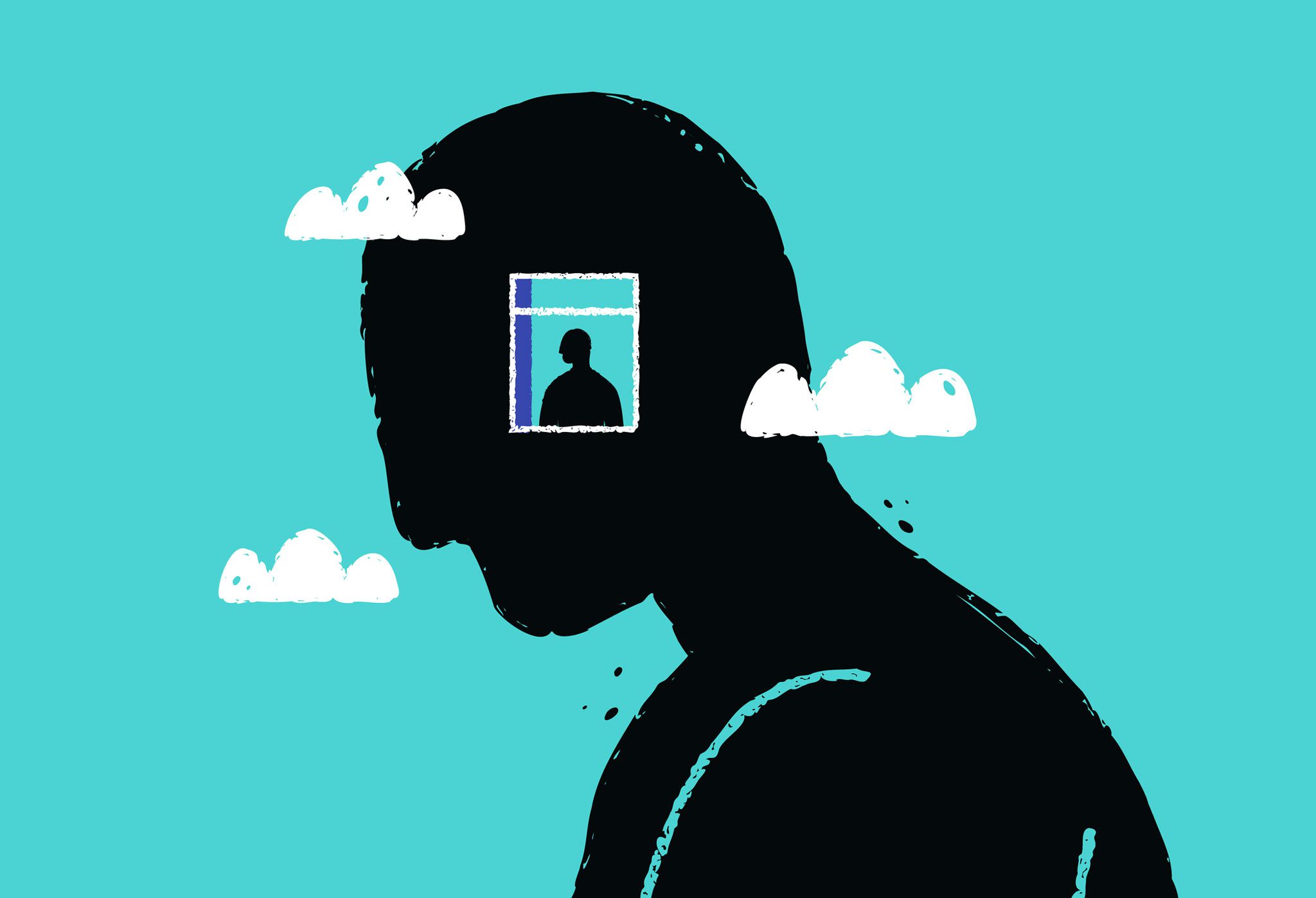
While the idea of speaking in front of a large group triggers anxiety for many of us, other people struggle with anxiety over routine activities. If your fearfulness is keeping you from living your normal life and you often feel overwhelmed, on edge, or as if something bad is about to happen, you may be dealing with an underlying anxiety disorder. Fortunately, there are simple steps you can take to begin to manage your anxiety effectively and recognize your triggers.
If Anxiety is Ruining Your Life, You’re Not Alone
If you’ve ever felt alone in your anxiety struggles, you’re actually far from it. Many people will deal with anxiety at some point in their lives. According to the National Institute of Health, 19% of people have struggled with an anxiety disorder in the last year, with females more likely to be affected than males.1 Younger people frequently face anxiety too, with about 31% of adolescents aged 13 to 18 experiencing some form of anxiety at some point in their lives.1
Jonathan Artigue, LMFT, a therapist at Neuro Wellness Spa in Manhattan Beach, emphasizes:
“One thing I’d like people to know is that anxiety disorders are a very real thing and not a sign of weakness or ‘being a weirdo’ as I’ve heard some people speak about themselves, not realizing how common they are and how significantly impairing anxiety disorders can be.”
Related: What Is Anxiety?
You don’t have to handle anxiety on your own. Reach out to our anxiety experts today to learn more about how we can help.
What Does Severe Anxiety Feel Like?
Anxiety symptoms can be traced back to your body’s natural response to danger. If there’s a real threat (like a bear chasing you), this response is normal and even helpful. However, with anxiety, this response shows up at times when there is no actual threat (like leaving your home or entering a supermarket).
Anxiety looks different for everyone, but you may experience the following:
- Shortness of breath
- Tightness in the chest
- Overthinking or racing thoughts
- Stomach cramps
- Feeling on edge
- Restlessness
- Heart palpitations
- Fatigue
- Difficulty falling or staying asleep
- Panic attacks
When these symptoms creep up and constantly interfere with your daily activities, it can be a sign that you’re struggling with an anxiety disorder.
Related: 8 Physical Symptoms of Anxiety and How to Identify Them
Why Am I Always Anxious?
Anxiety is triggered by a combination of factors, including stress, your environment, your health, and genetic predispositions. Some reasons people struggle include:
- Chronic stress – Stressful life events and changes like moving, changing jobs, or the death of a loved one can all cause anxiety symptoms.
- Untreated anxiety – If you have an untreated anxiety disorder, you may feel constantly on edge.2
- Nervous system dysregulation – Your body may give off constant, high-alert signals, leading to racing thoughts, panic, and overwhelming anxiety.
Because anxiety is so complex, it can be difficult to pinpoint a single source of your symptoms.
What Is Considered Chronic Anxiety?
Chronic anxiety is anxiety that occurs regularly. It’s persistent and often lasts for months. Some people experience chronic anxiety on and off for years. This type of anxiety can significantly interfere with your daily life.
What Does a Panic Attack Feel Like?
During a panic attack, your heart may race, and you might feel dizzy, shaky, or sweaty. You may feel like something bad is about to happen or as though you’re “losing your mind.” Many people go to the ER during their first panic attack, believing they are dying or having a medical emergency; however, it’s important to remember that this false alarm will pass with time.
How Do I Stop Anxiety From Ruining My Life?
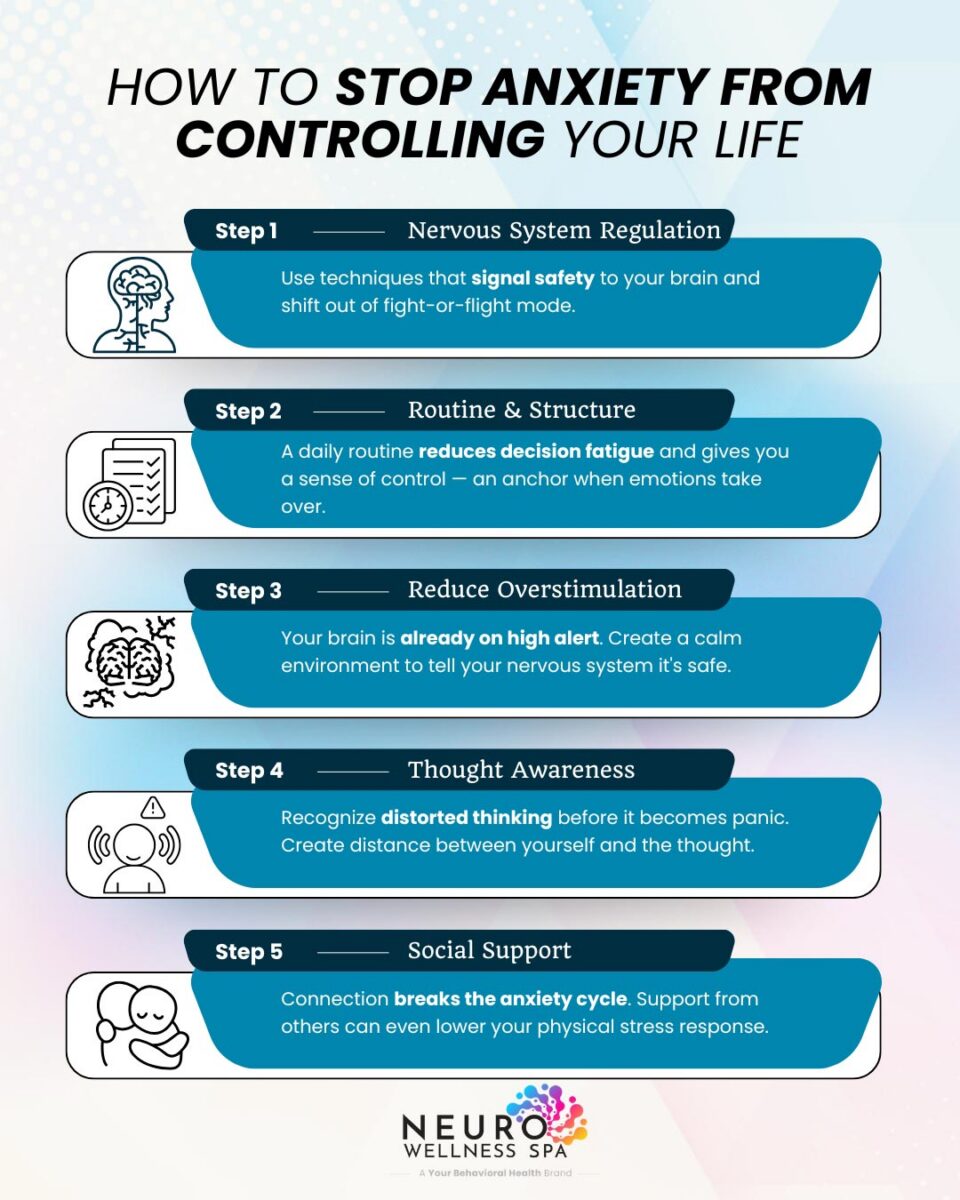
When you’re dealing with anxiety, it can feel almost impossible to control. However, there are several steps you can take to keep it from taking over.
Nervous System Regulation
When your nervous system is keyed up, you should use quick, simple interventions to signal to your brain that you are safe. These include “vagus nerve hacks,” which shift you from “fight-or-flight” mode to a calmer mindset.3
The following techniques can help:
- Physiological sigh – Try “sighing it out” by inhaling deeply through your nose, then inhaling a second short breath in to expand the lungs all the way – followed by slowly exhaling through your mouth to release tension.
- Cold water exposure – By splashing freezing cold water on your face or holding an ice cube, you can stimulate your vagus nerve to interrupt anxious thoughts and help reset your nervous system.4
- Grounding techniques – Mindfulness techniques that pull your focus away from racing thoughts and back to the present moment are helpful with anxiety.5 You can also try listening to soothing music, progressive muscle relaxation, and box breathing.6
By shifting your body out of a fear state, you should start to experience some relief from your anxiety symptoms.
Routine and Structure
A daily routine can help turn unpredictable days into more manageable patterns and prevent you from feeling overwhelmed. Structure also helps reduce “decision fatigue” and gives you a better sense of control over your environment. Think of routine acting as an anchor whenever your emotions start taking over, or you’re struggling with “what-if” thinking.
Reducing Overstimulation
Decreasing overstimulation isn’t just about comfort. When you’re struggling with anxiety, your brain already constantly works in “high-alert” mode. Bright lights, loud noises, and a chaotic or stressful environment can make things worse.
To deal with this, create a “quiet zone” somewhere in your home. Low lighting, minimal noise, and no clutter can help put your mind at ease. Consider using noise-canceling headphones or sunglasses to reduce overstimulation when you’re out in public. By reducing overstimulation, you are sending a message to your nervous system that you are not in danger and that you can relax.
Thought Awareness
Anxiety distorts reality and makes your problems seem much larger and more dangerous than they actually are. By using mindful awareness of your thoughts, you can learn how to recognize distorted thinking before it gives way to panic. For example, if you’re faced with a task and think, “I can’t do this,” try rephrasing it to, “I am noticing I’m having the thought, ‘I can’t do this,’ but it is only a thought, not necessarily true.” This way, you create distance between your true self and the thought you’re having.
Artigue highlights this dynamic clearly:
“Anxiety is always about the future – the more time we spend there in our minds, the less connected we are with real life and the present moment – we can miss out on so much by giving anxiety power over our actions.”
Social Support
Sometimes anxiety prevents us from reaching out to others when we truly need the connection. But social support can break this cycle. Knowing that you have support from others may also help lower your physical response to stress.7
Your social support can come in the form of a professional counselor, peer communities, or other groups of people who can relate to what you’re going through. Even something as simple as texting or calling a good friend when you’re anxious can help distract you from your thoughts.
As Artigue puts it:
“There is help available, and you can learn ways of freeing yourself from fear-based and intrusive thoughts and worries. You can learn how to live fully without being held back or letting anxiety stop you from living and enjoying life.”
When Does Anxiety Become Severe or Debilitating?
Everyone struggles with anxiety from time to time. But when does anxiety get to the point where it becomes debilitating? Anxiety crosses that line when it moves from being manageable to a force that gets in the way of your life and happiness. From a clinical perspective, this threshold is not just about how your anxiety feels, but also about how much it affects your ability to function in the real world.
Related: Types of Anxiety Disorders: Mild Anxiety to Crippling Anxiety
When Should You Seek Treatment for Anxiety?
While everyone deals with occasional anxiety, it becomes hard to know what is “normal” and when to consider professional help. When anxiety is severe or interfering with daily life, it’s time to seek help.
What Qualifies as Severe Anxiety?
Here are some red flags to look out for:
- Experiencing symptoms more days than not for at least six months.
- Avoiding work or school, neglecting your hygiene, and having difficulties with relationships.
- Constantly avoiding people, places, and situations to prevent anxiety symptoms.
- Being unable to control your anxiety, regardless of the strategies you use.
- Experiencing physical exhaustion, insomnia, muscle tension, and panic attacks.8
Once your anxiety starts deciding what you get to do every day, this is when it becomes something that should be addressed with a professional.
What Is the Best Treatment for Anxiety Disorders?
The best treatment for anxiety is highly personalized, depending on how it manifests in your life. Anxiety treatments often consist of talk therapy, medication management, and combination care.
Therapy
Therapy works by retraining your brain to handle anxiety triggers differently. What therapy is most effective for anxiety? There are several therapies that have research supporting their use for anxiety. Cognitive behavioral therapy is one example.9 Through CBT, you can identify thinking traps, or patterns of thought, and then reframe them. Exposure therapy is another research-supported therapy for anxiety. It’s useful for helping you face your fears in a controlled, supported manner so your brain learns that it’s safe.10
Related: Anxiety Therapy and Integrated Strategies
Medication
Some medications can help calm the physical symptoms of anxiety so you can function better during your daily routine. SSRIs and SNRIs are usually the first-line approach used.11,12 Over time, they can help balance chemicals in your brain that regulate your mood.
Related: Anxiety Medication: Your Guide to Effective Treatment Strategies
Combination Care
People sometimes need a combination of medication and therapy to treat anxiety. While medications provide quick relief from symptoms, therapy goes deeper to address your thought processes and reduce overwhelming feelings.
Combination care can also be helpful if your symptoms are keeping you from focusing during counseling sessions. This way, medication can clear enough mental space for you to do the work required in therapy.
Does Anxiety Medication Actually Help?
Yes, anxiety medications can help. However, they are not a cure for the underlying causes of anxiety. They should be thought of as a tool that works by calming your physical “alarm system.” Because it lowers the intensity of your symptoms, you can actually work towards applying the coping skills you learn.
Is anxiety medication the right fit for you? Our psychiatrists can help you determine the right course of treatment to manage your anxiety symptoms.
Can Anxiety Go Away?
Anxiety can be chronic, meaning it can last a long time or come back after treatment. But, with the right support and treatment, many people achieve remission from severe anxiety symptoms.
Jonathan Artigue, LMFT, encourages people not to wait:
“There’s no time like the present to begin disconnecting from fear-driven fantasies and re-connecting with life.”
How Neuro Wellness Spa Can Help
At Neuro Wellness Spa, you can receive access to high-quality treatment programs and services tailored to meet your needs. Our expert team delivers transformative care for those who are living with mental health issues, including anxiety. You can benefit from a variety of scientifically-driven programs, including:
Our mental health professionals specialize in providing compassionate care and personalized treatments that are tailored to meet your unique needs.
Anxiety can be difficult to live with, but with professional help, you can start feeling better soon. Want to learn more about our services? Contact Neuro Wellness spa to speak with one of our specialists and begin your better mental health journey.
References
- National Institute of Mental Health. (2024). Any Anxiety Disorder. Www.nimh.nih.gov; National Institute of Mental Health. https://www.nimh.nih.gov/health/statistics/any-anxiety-disorder
- National Institute of Mental Health. (2024). Anxiety disorders. National Institute of Mental Health. https://www.nimh.nih.gov/health/topics/anxiety-disorders
- Fanselow MS. Fear and anxiety take a double hit from vagal nerve stimulation. Biol Psychiatry. 2013 Jun 1;73(11):1043-4. doi: 10.1016/j.biopsych.2013.03.025. PMID: 23647735; PMCID: PMC4176918.
- Kenny BJ, Bordoni B. Neuroanatomy, Cranial Nerve 10 (Vagus Nerve) [Updated 2022 Nov 7]. In: StatPearls [Internet]. Treasure Island (FL): StatPearls Publishing; 2026 Jan-. Available from: https://www.ncbi.nlm.nih.gov/books/NBK537171/
- Norelli SK, Long A, Krepps JM. Relaxation Techniques. [Updated 2023 Aug 28]. In: StatPearls [Internet]. Treasure Island (FL): StatPearls Publishing; 2026 Jan-. Available from: https://www.ncbi.nlm.nih.gov/books/NBK513238/
- Bentley TGK, D’Andrea-Penna G, Rakic M, Arce N, LaFaille M, Berman R, Cooley K, Sprimont P. Breathing Practices for Stress and Anxiety Reduction: Conceptual Framework of Implementation Guidelines Based on a Systematic Review of the Published Literature. Brain Sci. 2023 Nov 21;13(12):1612. doi: 10.3390/brainsci13121612. PMID: 38137060; PMCID: PMC10741869.
- Yang L, Wang N, Li D, Zhao X, Wen M, Zhang Y, Liu Y. Social support and anxiety, a moderated mediating model. Sci Rep. 2025 Aug 11;15(1):29390. doi: 10.1038/s41598-025-14336-x. PMID: 40790318; PMCID: PMC12339740.
- Munir S, Takov V. Generalized Anxiety Disorder. [Updated 2022 Oct 17]. In: StatPearls [Internet]. Treasure Island (FL): StatPearls Publishing; 2026 Jan-. Available from: https://www.ncbi.nlm.nih.gov/books/NBK441870/
- Curtiss JE, Levine DS, Ander I, Baker AW. Cognitive-Behavioral Treatments for Anxiety and Stress-Related Disorders. Focus (Am Psychiatr Publ). 2021 Jun;19(2):184-189. doi: 10.1176/appi.focus.20200045. Epub 2021 Jun 17. PMID: 34690581; PMCID: PMC8475916.
- Racz JI, Bialocerkowski A, Calteaux I, Farrell LJ. Determinants of Exposure Therapy Implementation in Clinical Practice for the Treatment of Anxiety, OCD, and PTSD: A Systematic Review. Clin Child Fam Psychol Rev. 2024 Jun;27(2):317-341. doi: 10.1007/s10567-024-00478-3. Epub 2024 Apr 17. Erratum in: Clin Child Fam Psychol Rev. 2024 Sep;27(3):906-907. doi: 10.1007/s10567-024-00496-1. PMID: 38630196; PMCID: PMC11222222.
- Chu A, Wadhwa R. Selective Serotonin Reuptake Inhibitors. [Updated 2023 May 1]. In: StatPearls [Internet]. Treasure Island (FL): StatPearls Publishing; 2026 Jan-. Available from: https://www.ncbi.nlm.nih.gov/books/NBK554406/
- Sansone RA, Sansone LA. Serotonin norepinephrine reuptake inhibitors: a pharmacological comparison. Innov Clin Neurosci. 2014 Mar;11(3-4):37-42. PMID: 24800132; PMCID: PMC4008300. https://pmc.ncbi.nlm.nih.gov/articles/PMC4008300/