

Anxiety can show up in the body just as strongly as it does in the mind. For some people, physical symptoms like a pounding heart, chest tightness, or physical restlessness can feel just as distressing as anxious thoughts. Taking propranolol for anxiety can help calm these physical symptoms, even though it’s not meant to treat anxiety itself.
Although propranolol is not FDA-approved or indicated to treat anxiety disorders, some healthcare providers may prescribe it off-label to help manage the physical symptoms of anxiety, particularly in situations like performance anxiety or stage fright. In clinical practice, prescribing propranolol is usually just one piece of a broader, more comprehensive treatment plan for anxiety.
Propranolol for anxiety can ease physical symptoms, but lasting relief requires full support. Contact us today to start feeling better.
What is propranolol used for?
Propranolol hydrochloride is a non-selective beta blocker that was originally developed to treat cardiovascular conditions, including high blood pressure, irregular heart rhythms, and chest pain. It’s also used for migraines and tremors.
Over time, clinicians noticed something else: many patients appeared calmer before medical procedures. As Dr. Haiyan Wang, our board-certified psychiatrist, explains,
“It’s not technically an anxiety medication, but it blocks adrenaline receptors, so your heart doesn’t race, and you don’t get the physical anxiety symptoms like sweating, trembling, or butterflies.”
By reducing these physical signals, propranolol can help interrupt the anxiety cycle without directly changing brain chemistry.
Because of this effect, some healthcare providers prescribe propranolol off-label to help manage the physical symptoms of anxiety, especially in situational settings.1
How does propranolol work to treat anxiety?
Anxiety triggers your nervous system to release stress hormones that prepare your body for danger. This can increase blood pressure, tighten blood vessels, and speed up your heart rate.
Propranolol works by:
- Blocking beta-adrenergic receptors in the heart and blood vessels
- Reducing heart rate and blood pressure
- Blunting the physical surge of the fight or flight response
By calming the body, propranolol may make anxiety feel more manageable in the moment. However, it does not address anxious thoughts, trauma responses, or emotional patterns that contribute to anxiety disorders.2
Anxiety disorders and propranolol
There are many types of anxiety disorders, including panic disorder, generalized anxiety disorder, social phobia, and post-traumatic stress disorder. Research consistently shows that propranolol is not an evidence-based pharmacological treatment for the treatment of anxiety disorders as a whole.
Systematic review and meta-analysis findings indicate:
- Poor evidence supporting propranolol’s efficacy for chronic anxiety disorders
- No consistent benefit compared to placebo or standard anti-anxiety medications
- Greater usefulness for short-term, situational anxiety rather than long-term treatment2,3
For ongoing anxiety symptoms, most medications with robust evidence include selective serotonin reuptake inhibitors (SSRIs) and other first-line anxiety medications.
Panic disorder and panic attacks
People with panic disorder often experience sudden panic attacks that include chest pain, shortness of breath, dizziness, and fear of losing control. While propranolol may reduce heart rate during panic attacks, it does not prevent panic disorder or treat the underlying condition.
Clinical guidelines generally favor:
- Psychological therapy, such as cognitive behavioral therapy, or CBT
- Selective serotonin reuptake inhibitors, also known as SSRIs
- Other evidence-based pharmacological treatment options
Propranolol may be considered in limited situations, but it is not a standalone treatment of anxiety disorders involving panic attacks.2
Generalized anxiety disorder
In generalized anxiety disorder (GAD), anxiety is persistent, excessive, and often not tied to a specific trigger. Because propranolol only targets physical symptoms, it does not effectively treat the cognitive and emotional aspects of GAD.
For GAD, providers typically recommend:
- Ongoing therapy
- Long-term anxiety medication with proven benefit
- Skills-based coping strategies
Treating only blood pressure or physical symptoms leaves much of the anxiety untreated.
Situational anxiety, performance anxiety, and stage fright
Propranolol is most commonly prescribed for situational anxiety, including performance anxiety and stage fright. These are moments where anxiety is predictable and tied to specific events like presentations, interviews, or public speaking.
Dr. Wang notes why this can feel so effective for some people:
“When your heart isn’t pounding, your brain doesn’t read the situation as dangerous. You function normally—just without the racing heart that’s amplifying everything.”
Because propranolol typically works within about an hour and lasts three to four hours, it can be a practical option for time-limited stressors. This has contributed to increasing propranolol prescriptions among young adults seeking short-term relief.4
How quickly does propranolol work for anxiety?
When taken as directed, propranolol typically begins working within 30 to 60 minutes. Its effects can last several hours, depending on the dose and whether extended-release capsules are used.
When to take propranolol for anxiety?
For situational anxiety, propranolol is usually taken before the anxiety-triggering event. Your healthcare professional will determine timing and dosage based on your medical history and symptoms.
What is the typical dosage of propranolol for anxiety?
There is no single standard propranolol dose for anxiety. Lower doses are generally used than those prescribed for high blood pressure or heart conditions.
Dosage depends on:
- Your symptoms
- Blood pressure and heart rate
- Kidney or liver problems
- Other medications you’re taking
Never adjust or combine doses without medical guidance.
What are the most common side effects of propranolol?
Most side effects of propranolol are related to its effects on heart rate and blood pressure.
Common side effects include:
- Fatigue or low energy
- Dizziness or lightheadedness
- Cold hands or feet
- Low blood pressure
- Slow heartbeat
Dr. Wang also cautions that propranolol is often misunderstood as “harmless” because it isn’t sedating:
“I’m seeing more young people getting these pills from friends or online without medical oversight. Propranolol can drop blood pressure and heart rate dangerously, even in otherwise healthy people.”
More serious risks include fainting, irregular heartbeat, cardiac complications, and propranolol overdose, particularly when taken incorrectly or combined with other medications.1,5
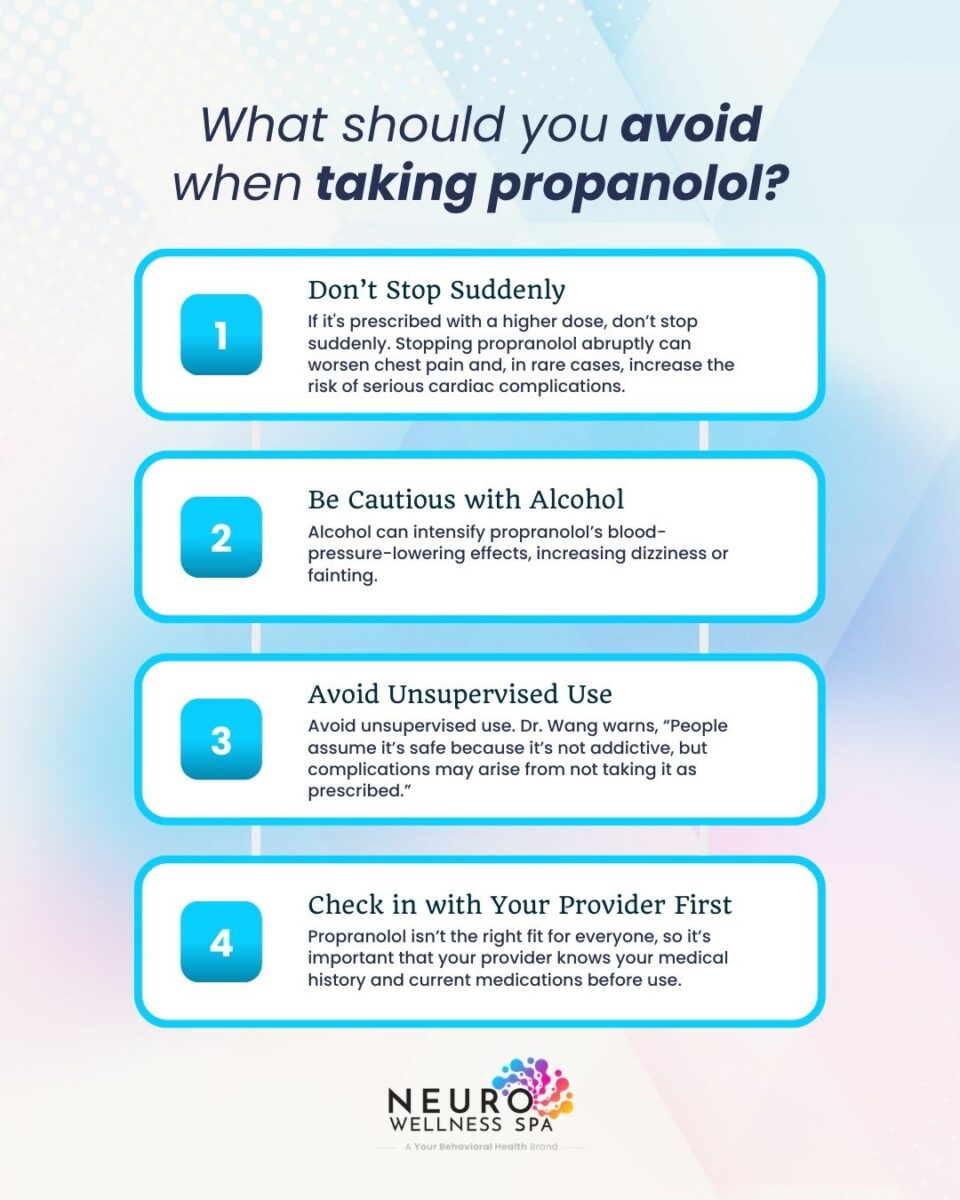
What should you avoid when taking propranolol?
There are a few important precautions to keep in mind when taking propranolol.
- If it’s prescribed with a higher dose, don’t stop suddenly. Stopping propranolol abruptly can worsen chest pain and, in rare cases, increase the risk of serious cardiac complications.
- Be cautious with alcohol. Alcohol can intensify propranolol’s blood-pressure-lowering effects, increasing dizziness or fainting.
- Review health conditions with your healthcare provider first. Propranolol may not be appropriate if you have asthma, certain heart conditions, low blood pressure, diabetes with frequent low blood sugar, or kidney or liver problems.
- Avoid unsupervised use. Dr. Wang warns,
“People assume it’s safe because it’s not addictive, but there are cases where patients get serious cardiovascular complications from not taking it as prescribed.”
Always share your full medical history and medication list with your healthcare professional before taking propranolol.
Propranolol versus other anxiety medications
Propranolol versus other anxiety medications highlights an important distinction: some treatments primarily target the body, while others focus on the brain.
Unlike SSRIs or other long-term anxiety medications, propranolol does not address anxiety disorders fundamentally. Instead, it reduces the physical symptoms that can escalate anxiety in the moment. Dr. Wang explains that propranolol stands out among beta blockers because “it acts fast, and also has better effects on the peripheral nerve system”.
This makes propranolol useful for specific situations, but not a replacement for evidence-based treatment of anxiety disorders that includes therapy and, when appropriate, long-term medication support.
Most clinicians view propranolol as a short-term support, not a replacement for comprehensive anxiety treatment.
Related: Anxiety Medication: Your Guide to Effective Treatment Strategies
| Medication type | What it targets | How quickly it works | Best for | Limitations |
|---|---|---|---|---|
| Propranolol (beta blockers) | Physical symptoms (heart rate, tremors, sweating, blood pressure) | 30–60 minutes | Situational anxiety, performance anxiety, stage fright | Does not treat anxious thoughts or underlying anxiety disorders; off-label use only |
| SSRIs (selective serotonin reuptake inhibitors) | Brain chemistry linked to anxiety and mood | 2–6 weeks | Generalized anxiety disorder, panic disorder, social phobia, chronic anxiety disorders | Takes time to work; possible side effects early in treatment |
| Benzodiazepines (e.g., Xanax) | Central nervous system calming | 15–60 minutes | Acute panic attacks, short-term crisis use | Risk of dependence, tolerance, sedation; not ideal for long-term use |
| Other beta blockers | Physical stress response | 30–60 minutes | Similar situational uses | Less commonly prescribed; similar limitations as propranolol |
| Therapy (CBT, psychological therapy) | Thought patterns, behaviors, triggers | Gradual, builds over time | Long-term treatment of anxiety disorders | Requires consistency and engagement |
For many people, the most effective treatment of anxiety combines medication management with psychological therapy, allowing both physical symptoms and emotional drivers to be addressed together.
Related: Anxiety Therapy and Integrated Strategies
You deserve care that addresses both the body and the mind. Connect with us to explore what treatment could look like for you.
Mental health, therapy, and long-term anxiety care
Anxiety often develops over time and may be linked to trauma, stress, or how anxiety began earlier in life. Treating anxiety effectively usually requires addressing both physical and psychological components.
An effective treatment of anxiety may include:
- Medication and psychiatric support
- Weekly sessions with an anxiety therapist
- TMS (transcranial magnetic stimulation) therapy
- Understanding what triggers your anxiety and how it affects you
- Learning helpful coping skills and changes to your lifestyle
- For more severe cases, comprehensive mental health programs provide an elevated level of support with multi-faceted treatments from anxiety experts
Medication alone rarely resolves chronic anxiety disorders. Thankfully, there are treatment methods available that can help. If you or a loved one is experiencing physical and mental anxiety symptoms, contact Neuro Wellness Spa for support. Our approach to anxiety treatment addresses not only the symptoms, but the triggers and causes as well. Our care team will work with you to provide a treatment plan that empowers you to manage your anxiety safely and effectively.
Frequently asked questions about propranolol for anxiety
It may help with physical anxiety symptoms, but evidence does not support its use as a primary treatment for anxiety disorders.
Current research shows limited benefit for long-term anxiety treatment and highlights potential cognitive risk with chronic use [2,3].
Some doctors prescribe beta blockers to reduce physical symptoms during situational anxiety or stage fright.
Frequency depends on your provider’s guidance and whether it’s prescribed as needed or daily.
References
- Robinson, L. (2026, February 4). Propranolol for Anxiety: Does it Work and Are There Risks? HelpGuide.org. https://www.helpguide.org/mental-health/treatment/propranolol-for-anxiety
- Steenen, S. A., Van Wijk, A. J., Van Der Heijden, G. J., Van Westrhenen, R., De Lange, J., & De Jongh, A. (2015). Propranolol for the treatment of anxiety disorders: Systematic review and meta-analysis. Journal of Psychopharmacology, 30(2), 128–139. https://doi.org/10.1177/0269881115612236
- Fields, L. (2025, November 20). This common heart medication may ease anxiety. Cedars-Sinai Medical Center. https://www.cedars-sinai.org/stories-and-insights/expert-advice/this-common-heart-medication-may-ease-anxiety
- Kuzub, A. (2025, October 20). Celebrities use this common heart medication to calm anxiety. Should you try propranolol? Northeastern Global News. https://news.northeastern.edu/2025/09/15/beta-blockers-anxiety-celebrity-trend/
- Szeleszczuk, Ł., & Frączkowski, D. (2022). Propranolol versus Other Selected Drugs in the Treatment of Various Types of Anxiety or Stress, with Particular Reference to Stage Fright and Post-Traumatic Stress Disorder. International Journal of Molecular Sciences, 23(17), 10099. https://doi.org/10.3390/ijms231710099