
Have you ever found yourself wide awake at 3 a.m., mind racing with tomorrow’s worries, or waking up exhausted despite spending eight hours in bed? These aren’t just “bad nights” — they’re often signals from your body that stress, anxiety, or depression is disrupting one of your most fundamental needs. When your cortisol levels spike from chronic stress, when racing thoughts prevent the mental quiet necessary for rest, or when depression throws off your entire sleep-wake cycle, the ripple effects touch every aspect of your life.
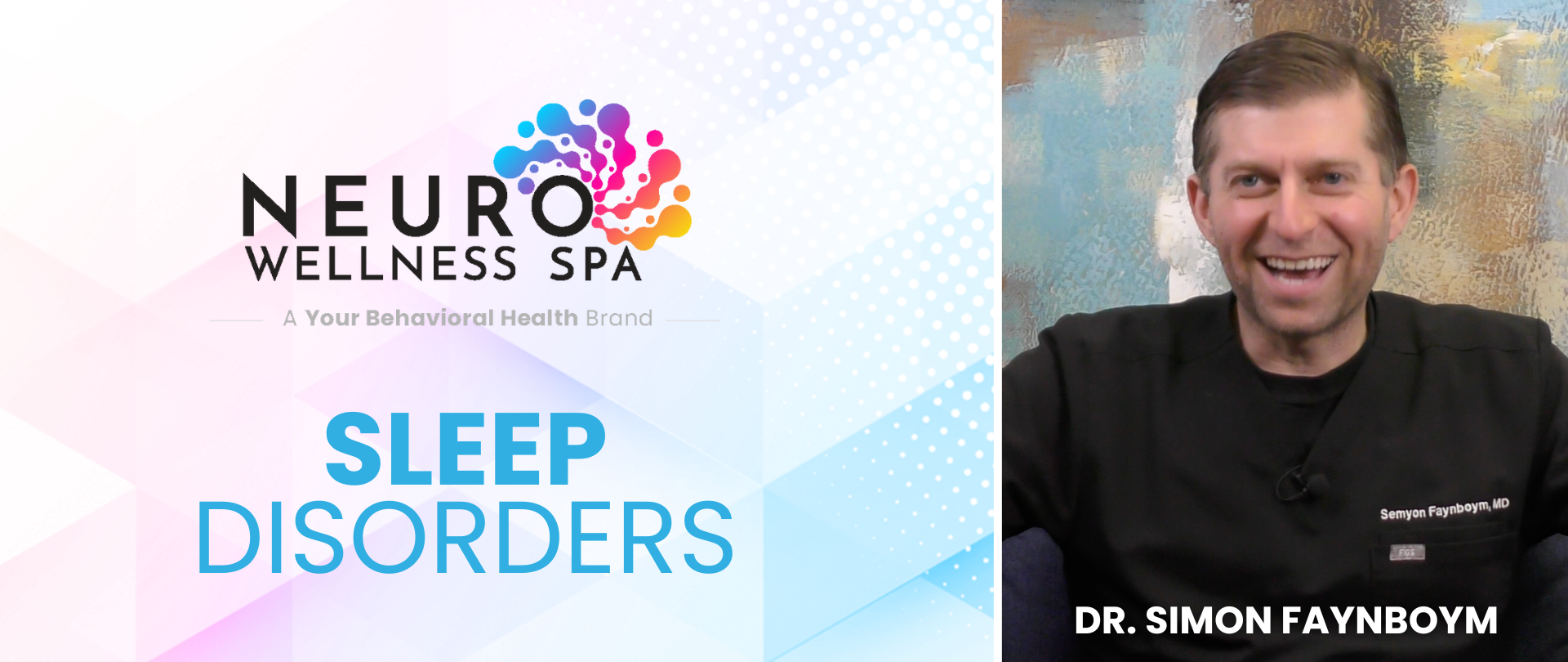
Dr. Simon Faynboym, M.D., medical director and psychiatrist at Neuro Wellness Spa in South Torrance and Long Beach, recognizes that treating sleep disorders requires understanding the intricate web connecting mental health, stress response, and sleep quality.
“Sleep and stress can really take a toll. For example, why do I wake up before my alarm clock? Well, that could be stress. Tough day at work, midterms coming up, financial stressors — all of that can affect your sleep,” explains Dr. Faynboym, highlighting how everyday stressors manifest in disrupted sleep patterns.
Perhaps most importantly, Dr. Faynboym explains the frustrating cycle many people experience: poor sleep creates anxiety about being tired, while that very anxiety prevents the restorative sleep your body desperately needs. Breaking this “catch-22” requires more than just better sleep hygiene — it demands addressing the root mental health issues driving the problem.
In this informative video, you’ll learn:
- The Interplay Between Sleep Disorders and Mental Health
- What Is TMS Therapy?
- Understanding Depression Symptoms and How To Cope With Them
Our psychiatrists offer evidence-based mental health treatments and the latest psychiatric medication options through convenient online visits across California or in-person at our locations in the Los Angeles area. Schedule your appointment today.
Dr. Faynboym also discusses innovative treatment approaches like transcranial magnetic stimulation (TMS), which can address sleep issues by targeting the underlying mental health conditions that disrupt healthy sleep patterns, offering hope for those who have struggled to find relief through traditional treatment methods.
If you or someone you care about is struggling with a sleep disorder, Neuro Wellness Spa offers comprehensive sleep and mental health treatment services with expert physicians providing personalized care. Our specialized team offers therapy, TMS therapy, medication management, and holistic approaches to address both sleep issues and underlying mental health conditions. Contact Neuro Wellness Spa today to begin your journey toward better sleep and improved mental wellness.
Dr. Simon Faynboym, M.D., on Sleep Disorders
“So, you may be wondering, how does depression affect your sleep? There are many ways, but most importantly, it can make you sleep too much or too little. Have you noticed that you’re sleeping too much or too little? Then you may be struggling with a symptom of depression.”
“Hi and welcome, my name is Dr. Simon Faynboym. I am the medical director (M.D.) at Neuro Wellness Spa and part of Your Behavioral Health.”
What are the common symptoms of depression?
“So, what are these symptoms of depression? There are several that I can mention. One is poor sleep. Others include lack of motivation, poor concentration, feeling hopeless, feeling down. Sometimes even anxiety is a symptom of depression, and those symptoms are something you should watch out for — we may not sometimes notice this.”
How are stress and sleep related?
“Sleep and stress can really take a toll. For example, why do I wake up before my alarm clock? Well, that could be stress. Tough day at work, midterms coming up, financial stressors — all of that can affect your sleep. And sometimes, in the middle of night if you do wake up, which can happen too, it’s harder to go to sleep because you may be thinking about these stressors.
“So, can stress affect your sleep? Absolutely — in more ways than one. It can affect your sleep by not letting you go to sleep when you want, keeping you up in the middle of night after you wake up, or even making you wake up early before your alarm clock.
What happens to your body when it shuts down from stress?
“Do you know what happens to your body when it shuts down from stress? So many things. So here are the top things that can happen. One, your cortisol levels can be increased. Cortisol is a hormone in our body that can lead to increased stress.
Higher cortisol levels are associated with increased stress, so we want that to go down.
“Two, stress can make you do things that you may not exactly normally want to do. And three, it causes lack of motivation, incomplete tasks, poor concentration. So when you have stress, seek out a mental health professional.”
How can I break the cycle of sleep anxiety?
“You may be wondering, when you have poor sleep and anxiety, are they connected? Absolutely. Can you have one without the other? Sometimes, but many times, anxiety can cause you to just think and think and think and not get the sleep you want.
“On the other hand, when you’re up all night and you know you have to wake up for work, and you know you have other duties and tasks coming up, and you may be tired, then this may cause you anxiety too. So it’s kind of like a catch 22. So, how do you break the cycle?
“Well, there’s several ways to do this. One, seek out professional help — we can get you in within three days at Neuro Wellness Spa. And two, there are things you can do at home while you’re waiting to get an appointment and/or while you are thinking about what to do.
“At home, there’s something called sleep hygiene. Sleep hygiene is a way that you can train yourself to get better sleep. For example, winding down with no electronics one hour before bed, limiting caffeine or drinking caffeine earlier in the day, allowing the caffeine to leave your system before bed. Or lastly, consider doing a very regimented sleep schedule — waking up at the same time and going to sleep at the same time.”
What is TMS?
“So, what is TMS? It’s an electromagnetic treatment for mental health. The way it works is you come in about 20 minutes a day, five days a week, for about six to eight weeks. It’s not invasive, non-surgical, there are no IVs, it does not change how you think or process information. You could drive to the appointment, and all you have to do is come in, get the treatment, and be on your day.”
Can TMS help with sleep?
“So you may be wondering, does TMS help with sleep? Absolutely it can. So, sleep is a common symptom in anxiety, depression, just in mental health in general, and TMS is geared for this kind of treatment. It can help sleep by addressing the core issue, and many times the core issue is not only sleep, but anxiety, depression, and all the symptoms that go along with it.
“Here at Neuro Wellness Spa, we treat you through a holistic approach. We offer TMS, we offer therapy, and medication management. We have a spectrum of treatment options that can come together to treat you as a whole.”