

When anxiety doesn’t respond to standard treatments, the search for relief can feel disappointing. Doctors may turn to other (off-label) options like Zyprexa. You may then wonder, “Is Zyprexa used for anxiety?”
While Zyprexa (olanzapine) is not FDA-approved for anxiety, it is often used as an off-label treatment.1 When a medication is used off-label, it means that it may treat conditions other than those it’s intended to treat. If first-line anxiety treatments are ineffective, a psychiatrist might include Zyprexa as part of your personalized treatment plan.
You don’t have to manage anxiety treatment alone. Connect with a psychiatrist at Neuro Wellness Spa who can evaluate whether Zyprexa is the right option for you.
What Is Zyprexa (Olanzapine) Mainly Used for?
Zyprexa is in a class of medications known as atypical antipsychotics. Mainly used to treat schizophrenia and bipolar I disorder,2 it works by rebalancing serotonin and dopamine levels in your brain to regulate mood, behavior, and thought patterns. In some cases, healthcare practitioners may prescribe olanzapine for anxiety, typically when it occurs with other disorders like bipolar disorder.
Can Olanzapine Help Anxiety?
Sometimes olanzapine is used off-label to treat severe or treatment-resistant anxiety, as well as anxiety related to bipolar disorder or psychosis. For some, it can help stabilize mood and reduce nervous or anxious thoughts.3
When treating anxiety, SSRIs, SNRIs, and therapy are usually the first-line treatments.4,5 However, if these treatments are not effective, olanzapine may be considered.
Related: Anxiety Medication: Your Guide to Effective Treatment Strategies
How Long Does Olanzapine Take to Work for Anxiety?
Nick Triviso, PMHNP, one of our nurse practitioners at Neuro Wellness Spa in South Torrance, states that:
“The medication peaks in your system after about 6 hours and reaches steady levels after a week, while full improvement may take a couple weeks.”
Olanzapine remains in the body for an extended period, so consistent dosing allows the medication to build to stable levels over about a week. It also has a half-life of about 21 to 54 hours.6 The half-life is the amount of time it takes for 50% of the medication to be metabolized and eliminated from your body.
Zyprexa Dosage Considerations
The dosing of Zyprexa varies considerably depending on the person and what it’s being used for. Lower doses are typically used off-label for anxiety or sleep-related issues. It’s important to only take this medication as prescribed and to carefully monitor its effects. With your input, your psychiatrist can adjust the dosage as necessary.
For olanzapine to work as intended, you must take it every day as directed by your health care provider. Missing a dose may increase your risk for a relapse in your anxiety symptoms. It’s also recommended not to stop taking olanzapine or change your dose without talking to your provider first.
Neuro Wellness Spa specializes in providing our clients with a personalized psychiatric approach and will work alongside you to ensure this medication is a good fit.
Potential Side Effects of Zyprexa
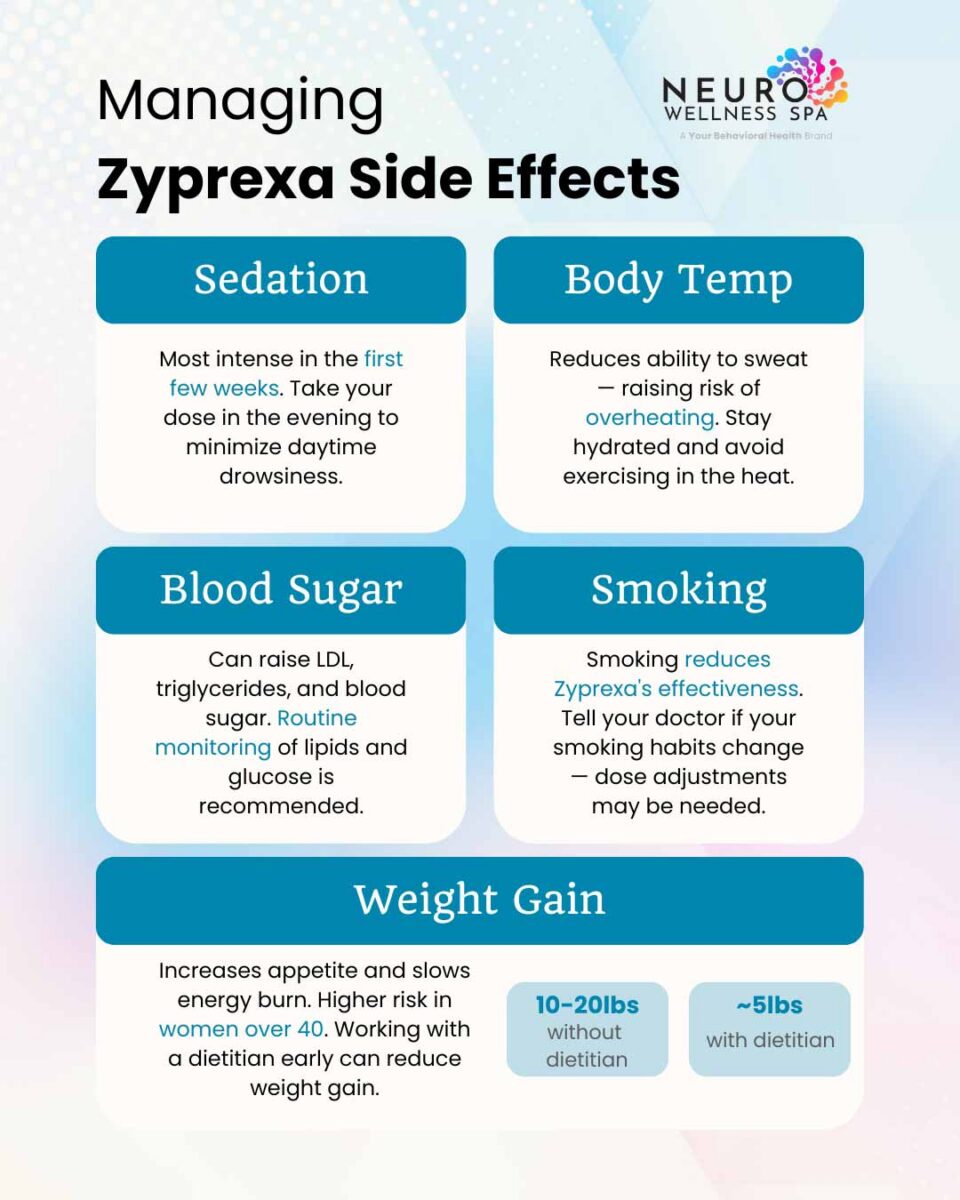
Zyprexa can be life-changing for those managing conditions like schizophrenia and bipolar disorder. In certain situations, psychiatrists may also use it off-label when severe anxiety occurs alongside other psychiatric conditions. However, it also has potentially significant side effects, especially regarding metabolic health. Here is an in-depth look at some common side effects and how you can best manage them.
Sedation
Sedation is one of the most common side effects of Zyprexa because it blocks histamine and dopamine receptors in the brain.6 This side effect is most intense during the first weeks of treatment.
Metabolic Side Effects
Zyprexa is considered one of the most “metabolically active” antipsychotic medications.6 Zyprexa can increase your appetite and change how your body burns energy. One study found that the risk of weight gain from Zyprexa is more prevalent in women over 40 years of age.7
Triviso explains that:
“In some cases, people can gain up to 10-20 pounds on this medication. However, people who work with a nutritionist and or dietician early in treatment may help reduce the amount of weight gained.”
Insulin Sensitivity and Effects on Cholesterol
Zyprexa can decrease insulin sensitivity, leading to high blood sugar and increasing the risk of type 2 diabetes.8 In some cases, Zyprexa may raise your levels of “bad” cholesterol (also known as low-density lipoprotein or LDL) and triglycerides.9 For these reasons, lipid monitoring to measure your cholesterol and cardiovascular risk assessment may be necessary while on this medication.
Temperature Regulation Issues
Another potential side effect can be your body’s ability to regulate temperature. This medication can reduce your ability to sweat and affect the hypothalamus (the part of your brain that regulates body temperature). This effect can increase your risk of overheating during exercise or heatstroke in hot weather. Additionally, research shows that your body may struggle to stay warm in very cold environments.10 When taking olanzapine, be sure to stay hydrated, avoid too much sun exposure, and be careful when working out in hot environments.
Olanzapine for Anxiety Precautions
Smoking has a well-documented major interaction with the efficacy of this medication.11 The combustion products in the smoke speed up certain liver enzymes responsible for metabolizing olanzapine, which reduces its efficacy.
Remember to tell your doctor if you start, stop, or change your smoking habits while taking Zyprexa. If you smoke, you may require closer monitoring and potentially higher doses of this medication to achieve (and maintain) its therapeutic effects.
Zyprexa Q&A with Nick Triviso
Understandably, most people have questions before starting Zyprexa. Board-certified Psychiatric Mental Health Nurse Practitioner Nick Triviso offers the following tips and best practices for taking olanzapine safely.
Q: How long does olanzapine take to work for anxiety?
A: “The medication peaks in your system after about 6 hours and reaches steady levels after about a week. Calming effects may happen within a few days, but improvement in anxiety and/or mood symptoms can take up to 1–2 weeks. Since the medication stays in your body for about 21 to 54 hours, being a few hours late with a dose usually isn’t a concern.”
Q: When is the best time to take Zyprexa?
A: “Take olanzapine at night if it makes you drowsy, since this is a common side effect. That’s what most people do. You can take it with or without food, whichever works for you.”
Q: Are there any foods I should avoid while taking Zyprexa?
A: “It is best to limit or avoid alcohol while taking olanzapine because it can increase drowsiness and other side effects. There are no specific foods you must avoid, but maintaining a healthy diet is important since this medication can increase appetite and weight gain.”
Q: What happens if I stop taking it suddenly?
A: “One important thing is to never stop olanzapine suddenly or without clinical support. You need to taper off gradually to avoid withdrawal effects.”
Q: Are there any activities I should avoid while taking Zyprexa?
A: “Be really careful in hot weather. Olanzapine affects your body’s ability to regulate temperature. Stay out of saunas and don’t exercise when it’s hot outside.”
Q: Can I smoke while taking olanzapine?
A: “Smoking can be a problem while being on Olanzapine. It can lower olanzapine levels in your body because it speeds up how the medication is broken down. If you smoke, your dose may need to be adjusted.”
Q: Is there anything else I should know about taking Zyprexa?
A: “If you’re using the dissolving tablets, make sure your hands are dry and let it melt on your tongue.
When is Zyprexa not the right fit?
Zyprexa can be really helpful for some people struggling with symptoms associated with an anxiety disorder. However, there are certain populations for whom this medication may not be appropriate. Zyprexa is not intended to treat mild anxiety or situational stress. First-line treatment options should be tried prior to taking olanzapine. Those who are sensitive to metabolic changes should also not take this medication.
Anxiety stems from unique personal experiences. Remember that everyone responds differently to treatment. Taking an individualized approach instead of a one-size-fits-all solution will provide you with the best course of treatment to address your symptoms and improve your quality of life.
If you’re exploring medication options for anxiety, our psychiatric team can help you find the right treatment approach. Contact Neuro Wellness Spa today to get started.
How Neuro Wellness Spa Approaches Medication Management
If you’re dealing with an anxiety disorder, remember, you aren’t alone. Anxiety disorders are one of the most common forms of mental illness. They are also highly treatable.
We understand how debilitating anxiety can be and how it can get in the way of your daily life. At Neuro Wellness Spa, our team can help you manage your symptoms with a personalized treatment plan that is specially fitted for you.
We specialize in providing our clients care through a modern mental health framework. We emphasize client-centered, evidence-based mental health care and accessibility with our in-network treatment. This way, we can provide you with the most effective anxiety treatment and approaches that address your symptoms and help you feel your best.
By working together, we can explore medication options, craft a tailored treatment plan just for you, and offer continuous support through medication management and in-person or online talk therapy. This collaborative approach ensures you have a plan that meets your needs.
Sources
- U.S. Food and Drug Administration. (2014). Zyprexa (olanzapine) prescribing information. https://www.accessdata.fda.gov/drugsatfda_docs/label/2014/020592s062021086s040021253s048lbl.pdf
- Thomas K, Saadabadi A. Olanzapine. [Updated 2023 Aug 28]. In: StatPearls [Internet]. Treasure Island (FL): StatPearls Publishing; 2026 Jan-. Available from: https://www.ncbi.nlm.nih.gov/books/NBK532903/
- Jackson, W. C., Manning, J. S., Connor, P. D., & Deardorff, O. G. (2004). Retrospective Study of Olanzapine in Depressive and Anxious States in Primary Care. Primary care companion to the Journal of clinical psychiatry, 6(5), 199–202. https://doi.org/10.4088/pcc.v06n0504
- Chu A, Wadhwa R. Selective Serotonin Reuptake Inhibitors. [Updated 2023 May 1]. In: StatPearls [Internet]. Treasure Island (FL): StatPearls Publishing; 2026 Jan-. Available from: https://www.ncbi.nlm.nih.gov/books/NBK554406/
- Sansone, R. A., & Sansone, L. A. (2014). Serotonin norepinephrine reuptake inhibitors: a pharmacological comparison. Innovations in clinical neuroscience, 11(3-4), 37–42.
- Thomas K, Saadabadi A. Olanzapine. [Updated 2023 Aug 28]. In: StatPearls [Internet]. Treasure Island (FL): StatPearls Publishing; 2026 Jan-. Available from: https://www.ncbi.nlm.nih.gov/books/NBK532903/
- Jain, S., Bhargava, M., & Gautam, S. (2006). Weight gain with olanzapine: Drug, gender or age?. Indian journal of psychiatry, 48(1), 39–42. https://doi.org/10.4103/0019-5545.31617
- Evans, S., Newton, R., & Higgins, S. (2005). Nutritional intervention to prevent weight gain in patients commenced on olanzapine: a randomized controlled trial. The Australian and New Zealand journal of psychiatry, 39(6), 479–486. https://doi.org/10.1080/j.1440-1614.2005.01607.x
- Fang, Z., Jamilian, P., Safargar, M., Prabahar, K., & Shuang, L. (2026). The effect of olanzapine on lipid profiles in humans: a time and dose response meta-analysis of randomized controlled trials. BMC cardiovascular disorders, 26(1), 107. https://doi.org/10.1186/s12872-025-05476-z
- Kansagra, A., Patel, S., & Wilcox, S. R. (2013). Prolonged hypothermia due to olanzapine in the setting of renal failure: a case report and review of the literature. Therapeutic advances in psychopharmacology, 3(6), 335–339. https://doi.org/10.1177/2045125313490304
- Surineni, K., Smith, A. L., Glein, R., & Schrader, N. (2025). A Case of Olanzapine Resistance from Heavy Smoking and Clinical Considerations. Kansas journal of medicine, 18(1), 21–22. https://doi.org/10.17161/kjm.vol18.22846