

When your teenager has been struggling for weeks, pulling away from friends, losing interest in things they used to love, or just seeming like a different person, it’s natural to wonder if something more serious is going on.
As a parent, seeing your teen deal with depression can be difficult. Fortunately, there are ways you can help them feel better again. Many treatment plans include a combination of talk therapy and medication. When used appropriately, antidepressants can be a helpful evidence-based tool to help your child overcome and manage their depression symptoms.
What are Antidepressants for Teens?
Selective serotonin reuptake inhibitors (SSRIs) are the most common types of antidepressants used for teenagers.1 They are “first-line” treatment options since they are associated with milder side effects compared to other antidepressants and are generally effective.
Although many antidepressants are prescribed “off-label,” the FDA has approved certain medications for treating depression in teens.2 Monitoring and dosing instructions are also different for adolescents since there are different safety risks involved when compared to adults.
When starting treatment, it’s important to begin with lower initial doses to minimize any side effects and account for the difference in how teenagers metabolize medication.
It’s important to closely monitor your child when they start any new treatment. All antidepressants have an FDA black box warning for those under 24, indicating a small increased risk of suicidal thoughts early in treatment, and untreated depression causes substantial suicide risk.3 In-person check-ins in the first month are recommended to ensure they adjust well to the medication.
Jamie Waarbroek, PMHNP, one of the Nurse Practitioners on our adolescent psychiatry team, explains her thoughtful approach to teen medication management:
“As a PMHNP specializing in adolescent psychiatry, I take the FDA black-box warning for increased suicidal thoughts in the first few weeks of antidepressant treatment very seriously. I schedule weekly in-person check-ins during the initial month, educate families on warning signs, and monitor teens closely on SSRIs. Close monitoring helps us safely harness medication benefits which often outweigh the risks of untreated depression especially when combined with cognitive behavioral therapy or interpersonal therapy for optimal long-term outcomes.”
Is depression medication right for your teen? Our psychiatrists can help determine if medication management could help treat your teen’s depression symptoms. Call us for a consultation today.
What Is the Best Antidepressant for a Teenager?
SSRIs are the first-line option for antidepressant medication in teenagers because they have the strongest evidence for safety and efficacy in this age group.4
Prozac (fluoxetine) and Lexapro (escitalopram) are the only FDA-approved medications for teenagers with depression.5 Zoloft (sertraline) is FDA-approved for treating obsessive-compulsive disorder in teens.6 However, it can be used off-label for depression if first-line treatments aren’t working.
SNRIs (serotonin-norepinephrine reuptake inhibitors) and atypical antidepressants show less consistent benefits (and a higher risk of side effects) in adolescents. They are typically a last-resort option when other medications have been tried without success, or your teen has comorbid conditions (such as anxiety disorders or chronic pain).
Related: SSRI vs SNRI: Differences, Benefits, and How They Work
How Teen Psychiatry & Medication Management Work
Unlike adults, your teenager is still growing physically and mentally. This underscores the importance of finding the right combination of treatments. Everyone has a unique brain chemistry, and what may work for one teen might not work for another. A medication management psychiatrist plays an essential role in keeping your child safe throughout treatment.
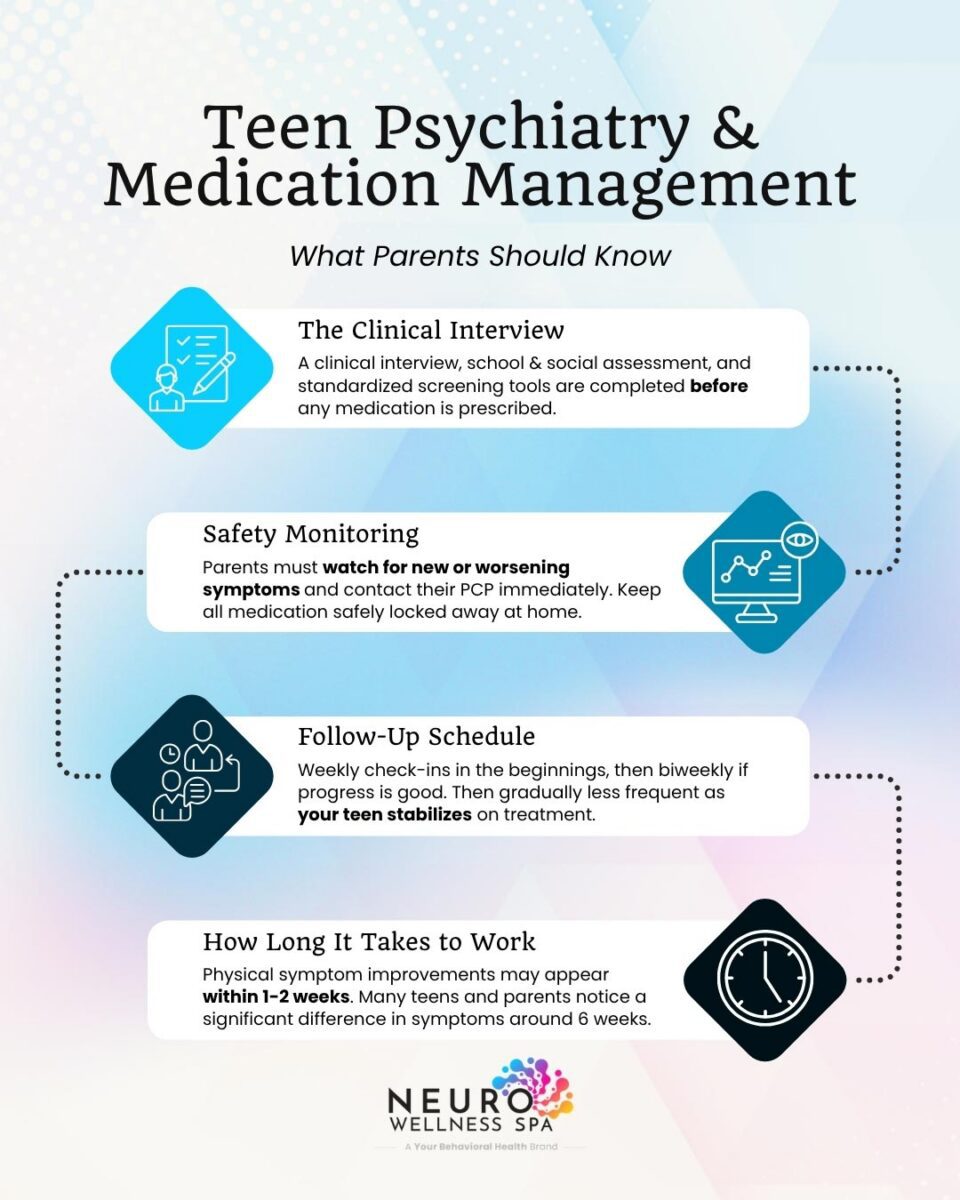
The Evaluation Process
Before your teen is prescribed any medicine, the psychiatrist will conduct a complete assessment of their symptoms. This includes a clinical interview, an assessment of their school behavior and social stressors, and standardized screening tools (like the PHQ-9 for teens).7 At this point, they may decide if medication is the appropriate treatment, if talk therapy and lifestyle adjustments should be tried first, or if they should all be used simultaneously.
Safety Monitoring
When it comes to teenagers taking antidepressants, safety is the top priority. Parents must be vigilant for new or worsening symptoms and immediately contact their child’s psychiatrist if there are significant negative changes. Parents should also keep medications safely locked away.
Follow-Up Schedule
In the beginning, frequent monitoring is essential to make sure your teen is responding to treatment. During the first few weeks, weekly face-to-face check-ins are ideal. If everything is working out well, these appointments may gradually move to every two weeks and then less frequently over time.
How long do antidepressant medications take to work?
Understandably, parents want to know what to expect during their teen’s first few weeks of treatment. Antidepressants take time to reach their full effect. During the first two weeks, some physical symptoms (like sleep or appetite) may show early signs of improvement. Many teens and parents see a noticeable improvement often by 4–6 weeks, with full benefits possibly taking 8–12 weeks.8
Related: Do Antidepressants Give Immediate Relief for Depression?
What Can I Give My Teenager for Depression?
If your child is dealing with mild depression, therapy is usually tried first. For moderate to severe depression, or when therapy alone isn’t enough, medication can be a helpful addition. The following signs may indicate that it’s time to consider medication management for your teenager:
- They are struggling with moderate to severe depression.
- Their symptoms are interfering with their education, relationships, and daily functioning.
- They go to therapy, but it doesn’t seem to be enough.
- They are experiencing significant symptoms, including suicidal thinking and behaviors.
As a parent, it can be difficult to tell if what your child is going through is related to the normal ups and downs of being a teenager or if it’s something more significant. By getting them the help they need, their symptoms can be adequately managed so they can lead a satisfying, fulfilled life.
Related: Best Antidepressant for Teens: Evidence-Based Medication Solutions for Adolescent Depression
What Is the Most Effective Treatment for Depression in Teens?
According to research, a combination of psychotherapy and antidepressant medication seems to be the most effective treatment for teens struggling with depression.9,10
When fluoxetine is used without therapy, teens may lack the coping skills to process emotional shifts that can occur early in treatment, which is one of the key reasons combining medication with psychotherapy leads to better long-term outcomes. Long-term results from the Treatment for Adolescents with Depression Study (TADS) and supporting meta-analyses found that cognitive behavioral therapy combined with medication leads to better long-term outcomes, though recent reanalyses underscore the need for close monitoring of any early behavioral changes.11
Combining psychotherapy with antidepressants provides a “two-pronged approach” to treatment. While medication treats biological symptoms, therapy builds coping skills and boosts long-term resilience. Some of the most common therapeutic approaches for depression include:
- Cognitive behavioral therapy – Structured, short-term therapy that focuses on the link between your thoughts, feelings, and behaviors.
- Dialectical behavior therapy – Teaches teenagers emotional regulation and how to tolerate difficult feelings without acting on impulsive urges.
- Family therapy – Addresses dysfunctional family patterns, improves communication, and strengthens support systems.
- Skills-based approaches – Focus on problem-solving rather than only talking through feelings.
All of these approaches can help your teenager set realistic goals and regain their sense of control. They can also help your teen understand the root causes of their depression and develop healthy coping skills, which can be especially useful as they grow.
How Do You Treat Depression in Teens?
Medications can be an effective tool to help your teen manage depression symptoms, but there are other steps you can take. A well-rounded approach can include lifestyle changes, getting involved with your child, communicating with their school, and helping them develop emotional regulation skills.
Establishing Healthy Habits
Your teen’s daily habits can impact their mood and energy levels. Encourage them to get active every day. Even a short afternoon walk can release mood-enhancing endorphins.12 Teenagers also need at least 8 hours of sleep per night.13 Keeping your teen on a consistent schedule can also help provide a sense of predictability, decreasing their stress.
Creating a Supportive Home Environment
Family support can make a world of difference for your teenager and help them feel more connected and not so alone. Strengthen your bond by engaging in relaxing activities together, like family walks, cooking meals, or other favorite activities.
School Accommodations
Depression can cause cognitive symptoms (like difficulty concentrating), which may require adjustments at school.14 Reach out to see about implementing a 504 plan (or an IEP).15 These can provide them with extra testing support, classroom flexibility, and workload management.
Emotional Regulation Skills
Learning how to manage intense emotions is an important part of growing up. Practices like meditation and deep breathing can help teenagers stay in the present moment while reducing anxiety. Expressing their feelings through creative writing, journaling, or artwork can provide them with positive ways to release pent-up emotions.16,17 Encouraging them to join after-school clubs can help them make friends and reduce isolation.
The teen years are difficult. Let our experts help your teen thrive with evidence-based mental health care and comprehensive therapy solutions. Reach out to get started today.
How to Help a Teen Struggling With Depression?
Parents want what’s best for their teens, but knowing what to do when they’re struggling can be difficult. Try active listening techniques with your child and use open communication skills (like using “I” statements) to invite conversations without causing defensiveness.18 When they open up, validate their feelings, and don’t be dismissive.
Pay attention to what your teen says and does. Watch for shifts in their mood and appetite, and whether they begin withdrawing from their favorite people and activities. These can be signs of worsening depression.
Encourage them to take their medication consistently, even if they start feeling better. If they attend counseling, make sure they go to every session.
Why Talking About Mental Health at Home Matters
Some teenagers hesitate to open up due to the stigma that still surrounds mental health. But treating depression is just as important as treating any other chronic illness. By normalizing and talking about mental illness, you can help reduce the shame or embarrassment they may feel.
Always trust your instincts if something seems off. Asking for help is a sign of care and not of failure. There are many resources available to help support your teen’s mental health. By validating their feelings, offering unconditional support, and modeling healthy coping skills, you can help them feel more seen, understood, and not alone in their struggles.
Ready to Take the Next Step in Your Teen’s Mental Health Care?
Finding the right treatment for your teenager’s depression can feel overwhelming, but you don’t have to figure it out alone. Antidepressants, when carefully prescribed and monitored, can be a meaningful part of your teen’s recovery, and when paired with therapy, the results tend to be even stronger.
At Neuro Wellness Spa, our psychiatrists specialize in teen medication management, working closely with both you and your child to find the right approach for their unique needs. If you’re ready to explore whether antidepressant therapy is the right fit for your teen, reach out to our team today.
References
- Dwyer, J. B., & Bloch, M. H. (2019). Antidepressants for Pediatric Patients. Current psychiatry, 18(9), 26–42F. https://pmc.ncbi.nlm.nih.gov/articles/PMC6738970/
- FDA. (2023). Depression Medicines. FDA. https://www.fda.gov/consumers/womens-health-topics/depression-medicines
- Spielmans, G. I., Spence-Sing, T., & Parry, P. (2020). Duty to Warn: Antidepressant Black Box Suicidality Warning Is Empirically Justified. Frontiers in psychiatry, 11, 18. https://doi.org/10.3389/fpsyt.2020.00018
- Dwyer, J. B., & Bloch, M. H. (2019). Antidepressants for Pediatric Patients. Current psychiatry, 18(9), 26–42F.
- U.S. Food and Drug Administration. (2019, September). Depression medicines [PDF]. https://www.fda.gov/media/132665/download
- Wagner, K. D., Ambrosini, P., Rynn, M., Wohlberg, C., Yang, R., Greenbaum, M. S., Childress, A., Donnelly, C., Deas, D., & Sertraline Pediatric Depression Study Group (2003). Efficacy of sertraline in the treatment of children and adolescents with major depressive disorder: two randomized controlled trials. JAMA, 290(8), 1033–1041. https://doi.org/10.1001/jama.290.8.1033
- Ford, J., Thomas, F., Byng, R., & McCabe, R. (2020). Use of the Patient Health Questionnaire (PHQ-9) in Practice: Interactions between patients and physicians. Qualitative health research, 30(13), 2146–2159. https://doi.org/10.1177/1049732320924625
- Chu A, Wadhwa R. Selective Serotonin Reuptake Inhibitors. [Updated 2023 May 1]. In: StatPearls [Internet]. Treasure Island (FL): StatPearls Publishing; 2026 Jan-. Available from: https://www.ncbi.nlm.nih.gov/sites/books/NBK554406/
- Treatment for Adolescents with Depression Study (TADS) Team (2005). The Treatment for Adolescents With Depression Study (TADS): demographic and clinical characteristics. Journal of the American Academy of Child and Adolescent Psychiatry, 44(1), 28–40. https://doi.org/10.1097/01.chi.0000145807.09027.82
- Depressed Adolescents Respond Best to Combination Treatment. (2007, October). National Institute of Mental Health (NIMH). https://www.nimh.nih.gov/news/science-updates/2007/depressed-adolescents-respond-best-to-combination-treatment
- Treatment for Adolescents with Depression Study (TADS). (n.d.). National Institute of Mental Health (NIMH). https://www.nimh.nih.gov/funding/clinical-research/practical/tads
- Hossain, M. N., Lee, J., Choi, H., Kwak, Y. S., & Kim, J. (2024). The impact of exercise on depression: how moving makes your brain and body feel better. Physical activity and nutrition, 28(2), 43–51. https://doi.org/10.20463/pan.2024.0015
- Paruthi, S., Brooks, L. J., D’Ambrosio, C., Hall, W. A., Kotagal, S., Lloyd, R. M., Malow, B. A., Maski, K., Nichols, C., Quan, S. F., Rosen, C. L., Troester, M. M., & Wise, M. S. (2016). Consensus Statement of the American Academy of Sleep Medicine on the Recommended Amount of Sleep for Healthy Children: Methodology and Discussion. Journal of clinical sleep medicine : JCSM : official publication of the American Academy of Sleep Medicine, 12(11), 1549–1561. https://doi.org/10.5664/jcsm.6288
- Korczak, D. J., Westwell-Roper, C., & Sassi, R. (2023). Diagnosis and management of depression in adolescents. CMAJ : Canadian Medical Association journal = journal de l’Association medicale canadienne, 195(21), E739–E746. https://doi.org/10.1503/cmaj.220966
- U.S. Department of Education, Office for Civil Rights. (2024, September). Depression fact sheet [Fact sheet]. https://www.ed.gov/sites/ed/files/about/offices/list/ocr/docs/ocr-factsheet-depression-202409.pdf
- Gómez-Restrepo, C., Casasbuenas, N. G., Ortiz-Hernández, N., Bird, V. J., Acosta, M. P. J., Restrepo, J. M. U., Sarmiento, B. A. M., Steffen, M., & Priebe, S. (2022). Role of the arts in the life and mental health of young people that participate in artistic organizations in Colombia: a qualitative study. BMC psychiatry, 22(1), 757. https://doi.org/10.1186/s12888-022-04396-y
- Zhang, B., Yang, L., Sun, W., Xu, P., Ma, H., & Abdullah, A. B. (2025). The effect of the art therapy interventions to alleviate depression symptoms among children and adolescents: a systematic review and meta-analysis. Clinics (Sao Paulo, Brazil), 80, 100683. https://doi.org/10.1016/j.clinsp.2025.100683
- Tennant K, Long A, Toney-Butler TJ. Active Listening. [Updated 2023 Sep 13]. In: StatPearls [Internet]. Treasure Island (FL): StatPearls Publishing