
Key takeaways
- Nighttime anxiety is common, real, and treatable.
- Anxiety can feel worse at night because distractions fade and your nervous system stays activated.
- Sleep anxiety, waking up with anxiety, anxiety dreams, and nocturnal panic attacks are different expressions of the same anxiety-sleep loop.
- Start with 2–3 tools: a buffer zone, breathing exercises, progressive muscle relaxation, and one cognitive strategy.
- If you can’t fall asleep after about 20 minutes, get out of bed and do something calm in low light until you feel sleepy.
- If symptoms persist or are severe, therapy, CBT-I strategies, and medication management can make a meaningful difference.
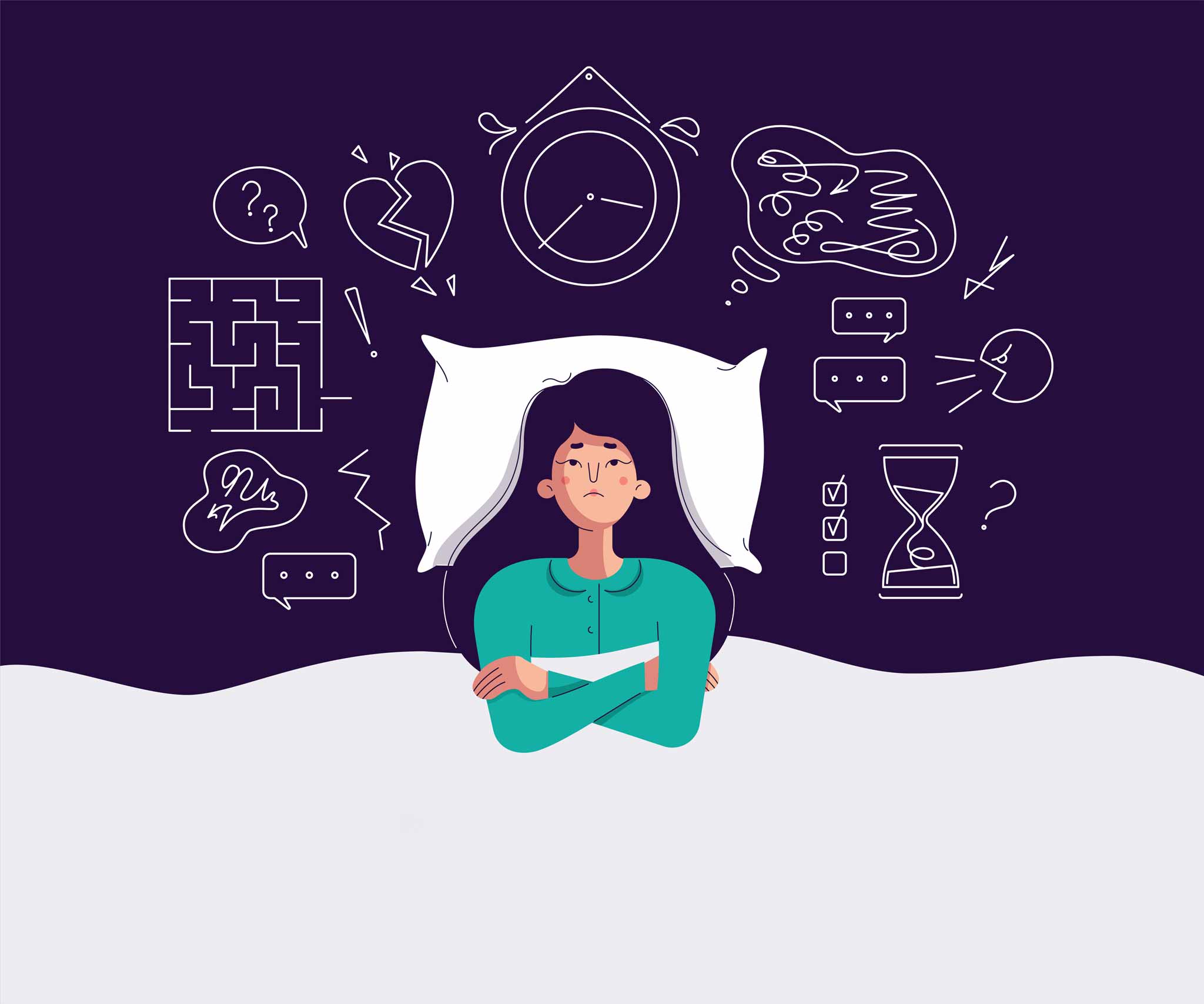
If you’ve ever been wide awake in bed with your heart rate up and your mind stuck on a loop, you already know how real nighttime anxiety feels. You might feel anxious as you’re trying to fall asleep, wake in the middle of the night with anxiety symptoms, or jolt awake from a nightmare, feeling like something is wrong.
Here’s the good news: anxiety at night is common, treatable, and manageable. With the right tools, you can calm anxiety, disrupt the vicious cycle of poor sleep and heightened anxiety, and move toward more restful sleep.
You don’t have to handle nighttime anxiety alone. Support is available today.
What is nighttime anxiety?
Nighttime anxiety (sometimes called night anxiety) is a pattern where anxious thoughts, worry, and physical symptoms intensify in the evening, at bedtime, or during the night. It can show up as:
- Difficulty falling asleep
- Trouble sleeping or frequent sleep disturbances
- Waking up with anxiety and racing thoughts
- Panic attacks at night (including nocturnal panic attacks)
- Anxiety dreams or nightmares that disrupt sleep
- Feeling alert even when you’re exhausted
Anxiety and sleep are tightly connected. Stress and worry can disrupt sleep, and sleep deprivation can make anxiety worse the next day, which fuels night anxiety again. This bidirectional cycle includes how poor sleep can worsen anxiety symptoms and how anxiety can make it harder to fall asleep and stay asleep.1
As Lindsey Rae Ackerman, LMFT, and Executive Director of Clinical Services at Neuro Wellness Spa, explains:
“Sleep plays a critical role in mental health. In therapy, improving sleep is often one of the most meaningful areas we can support because better sleep can have a direct and measurable impact on anxiety, mood regulation, and overall well-being.”
Related: What Is Anxiety?
Why is my anxiety worse at night?
A lot of people assume that anxiety being worse at night means you’re overthinking, but there’s more to it than willpower. At night, your brain is more likely to amplify what it couldn’t fully process during a busy day.
Think of it like this: during the day, your mind can feel like a busy restaurant where background noise drowns out individual conversations. At night, it can feel like an empty concert hall where anxious thoughts echo and get louder.
A few common reasons anxiety gets worse at night:
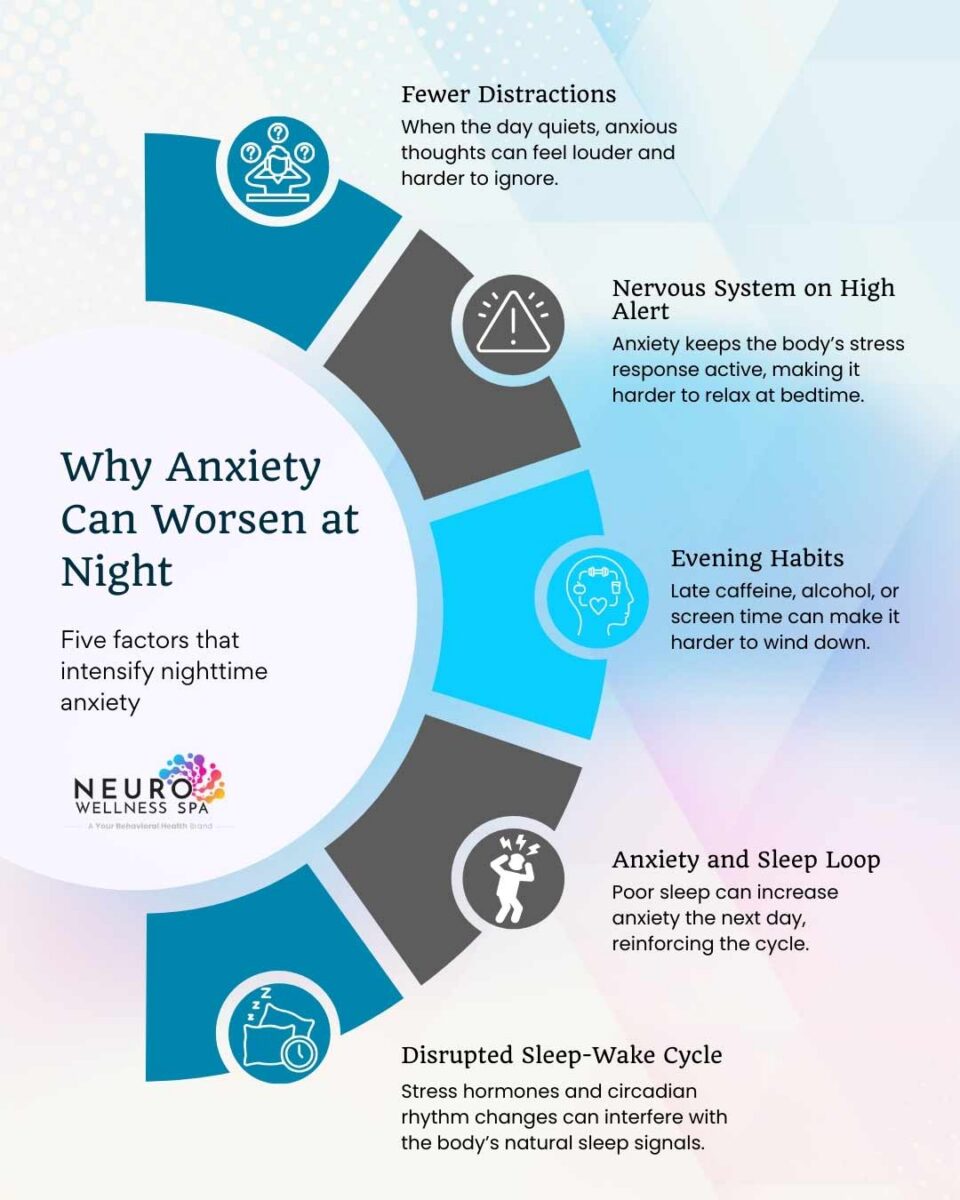
Fewer distractions, more mental space
When the day slows down, you notice what you’ve been holding. That can mean excessive worry, negative thought patterns, or replaying stressful life events.
Your nervous system stays on “high alert”
Anxiety activates your stress response. When your nervous system is stuck in “stay alert” mode, it’s harder to relax, fall asleep, or stay asleep.1
Circadian rhythm and cortisol levels
Your circadian rhythm (your body’s natural rhythm) influences sleep patterns, hormones, and alertness. Stress can keep cortisol levels elevated longer than they should be, which can contribute to heightened anxiety and sleep problems.1
Screen time and blue light emitted
Nighttime screen exposure can signal wakefulness to the brain, and blue light can suppress melatonin and shift circadian rhythms, making it harder to fall asleep.6
What causes anxiety at night?
There isn’t one cause of having anxiety at night. Nighttime anxiety is usually a mix of risk factors, brain chemistry, daily stress, and learned patterns.
Common contributors include:
- Chronic stress, burnout, or major life changes
- Anxiety disorders (like generalized anxiety, panic disorder, and social anxiety)
- History of trauma or a traumatic event
- Depression or other mental health disorders 2
- Sleep disorders (insomnia, sleep apnea, nightmare disorder)
- Caffeine later in the day
- Alcohol can disrupt sleep quality and REM sleep later in the night
- Irregular sleep habits or an inconsistent sleep schedule
If you are experiencing nighttime anxiety and feeling alone, it may be helpful to know that you are not. Reports indicate that an estimated 19.1% of U.S. adults experienced an anxiety disorder in the past year.2
How anxiety can show up
Anxiety can impair many areas of life and can spike during different times of the day. Here are some of the common descriptions of nighttime anxiety and sleep disturbances that are often symptoms of generalized anxiety disorder.
Sleep anxiety
Sleep anxiety is when the idea of sleep itself becomes stressful. You might fear being awake for hours, fear nightmares, or feel anxious about losing control. Sleep anxiety is anxiety specifically related to going to sleep or staying asleep, often linked with insomnia and other anxiety symptoms.4
Signs you might have sleep anxiety:
- You dread bedtime even when you’re tired
- You feel anxiety in your body as soon as you get into bed
- You start sleep math (counting how many hours you have left)
- You avoid going to bed because you’re worried you won’t fall asleep
Waking up with anxiety
You fall asleep, then you wake, and your brain is instantly on. This can feel like:
- Racing thoughts
- A surge of fear
- A jolt of adrenaline
- Worry about tomorrow or a stressful situation
Nocturnal panic attacks
Nocturnal panic attacks are panic attacks that happen during the night and wake you from sleep. They can feel intense and scary, especially because you wake up mid-surge without context.
Nocturnal panic attacks can cause sudden awakening with fear and symptoms like a racing heart and sweating.3 They resemble daytime panic attacks and can include a pounding heartbeat and altered breathing.5
Anxiety, dreams, and REM sleep disruption
Anxiety dreams can be vivid, stressful, and emotionally charged. Ongoing anxiety can interfere with sleep quality and may affect REM sleep, leading to disturbing dreams or nightmares. There is a close link between anxiety and sleep, including racing thoughts, frequent awakenings, and restless sleep.1
Nighttime anxiety symptoms: what you might notice in your body
Nighttime anxiety symptoms often include a mix of mental and physical symptoms:
- Racing thoughts, anxious thoughts, or a feeling that you can’t turn your brain off
- Difficulty concentrating or mind going blank
- Easily fatigued and irritable
- Restlessness and muscle tension
- Trouble sleeping, waking often, or sleep disturbances
Related: 8 Physical Symptoms of Anxiety and How to Identify Them
How to calm anxiety at night (a practical toolkit)
This is where we build your night plan. You don’t need to do everything, but choose 2–3 strategies that fit you, then repeat them consistently. That’s how you create better sleep habits over time.
1) Create a buffer zone before bed
A buffer zone is 30–60 minutes where you stop feeding your brain stress and start promoting relaxation.
A simple buffer zone might include:
- Dim the lights
- Put your phone on a charger out of reach
- Gentle stretching
- A warm shower
- Calming music
- Reading something light (not work email)
This helps shift your nervous system toward calm.
2) Do a mental dump list (then close the loop)
If worry follows you into bed, try a quick mental dump list. Write down:
- What you’re worried about
- What you might do tomorrow (even one small next step)
- Anything you don’t want to forget
This reduces rumination by giving your brain a place to store the thoughts.
3) Use steady breathing or deep breathing exercises
Breathing exercises can reduce anxiety by calming the stress response. Breathing exercises are a valuable tool to manage excessive worry and combat insomnia.1
Try this for 2–3 minutes:
- Inhale for 4 seconds
- Exhale for 6 seconds
- Keep your shoulders relaxed
If you notice yourself trying to force a calming effect, loosen your effort. Think: slow and steady, not perfect.
4) Progressive muscle relaxation
Progressive muscle relaxation can help you feel more in control of your body and reduce anxiety. It works well when bad anxiety shows up as tension.
Quick version:
- Tense your hands for 5 seconds, then release
- Shoulders up for 5 seconds, then release
- Tense calves for 5 seconds, then release
This helps promote relaxation and can support quality sleep.
5) The 5-4-3-2-1 grounding technique (five senses)
Grounding techniques can calm feelings of anxiety by moving your attention out of spiraling thoughts and into your senses.
Try the 5-4-3-2-1 technique:
- 5 things you can see
- 4 things you can touch
- 3 things you can hear
- 2 things you can smell
- 1 thing you can taste
It’s simple, but it’s powerful when you’re in the middle of the night.
6) Don’t look at the clock
Clock-watching fuels sleep anxiety: “If I fall asleep right now, I’ll get X hours.” That pressure makes it harder to fall asleep faster.
Turn your clock away. If you wake, focus on your plan, not the time.
7) If you can’t fall asleep after about 20 minutes, get out of bed
This is a key CBT-I idea: protect your bed as a cue for sleep, not worry. Getting out of bed if you can’t fall asleep, then shifting to a quiet activity can help you feel sleepy.1
Keep it low-light and low-stimulation:
- Read a few pages
- Listen to calming music
- Do a gentle stretch
- Try a short body scan
Then return to bed when you feel drowsy.
8) The cognitive shuffle (for racing thoughts)
Choose a neutral word (like “rainbow”). For each letter, create random mental images.
Example:
- R: rabbit, refrigerator, rocket
- A: apple, astronaut, anchor
Visualize each image for a few seconds, then move on.
This works because it interrupts rumination and shifts your brain into a more random, non-problem-solving mode, which makes it easier to fall asleep.
9) Butterfly hug (bilateral tapping)
Cross your arms over your chest and alternate gentle taps on your shoulders (left, right, left, right) for 30–60 seconds while you let anxious thoughts come and go without wrestling them.
This is a calming technique some therapists use in trauma-informed work and bilateral stimulation approaches. If you have a trauma history or a traumatic event that feels “activated” at night, it can be especially helpful to learn this with a mental health professional.
10) Constructive worry time (give your anxiety an appointment)
Pick a 15-minute window earlier in the evening (at least 2 hours before bed). Write:
- Worry in one column
- Next step (or no solution available) in the second column
Then put it away.
When worry shows up at night, remind yourself that you already handled what you could today.
11) Pendulation (for body-based anxiety)
If anxiety lives in your body, try this:
- Notice where you feel tension (chest, throat, stomach).
- Find one area that feels neutral or calm (hands, feet).
- Slowly shift attention back and forth, like a pendulum.
This helps your nervous system learn that it can move out of activation without forcing it.
Related: How to Reduce Anxiety: 10 Mental Health Habits That Can Help
Healthy sleep habits that support better sleep long-term
You don’t need a perfect routine, but small changes can improve sleep quality.
A few practical sleep hygiene anchors:
- Keep a consistent sleep schedule most days
- Reduce caffeine later in the day
- Keep the room cool, dark, and quiet
- Limit screen time close to bed (blue light emitted can interfere with melatonin)6
- Track patterns in a sleep diary for 1–2 weeks (wake time, bedtime, awakenings, caffeine, naps)
If your sleep patterns are consistently off, that sleep diary can be useful in therapy or sleep medicine conversations.
Related: What Is Sleep Hygiene? 10 Sleep Routine Tips To Improve Mental Health
When nighttime anxiety may mean it’s time to get professional help
If anxiety at night is stopping you from falling asleep or staying asleep most nights for a few weeks, it’s a good idea to seek professional support.
Signs it may be time:
- You dread bedtime most nights (sleep anxiety)
- You have frequent nocturnal panic attacks
- Poor sleep is impacting your daytime life
- You’re relying on alcohol, cannabis, or other substances to sleep
- You feel stuck in a vicious cycle of sleep deprivation and anxiety
One of the strongest evidence-based approaches for sleep-related anxiety and insomnia is CBT-I. The American Academy of Sleep Medicine has a clinical practice guideline on behavioral and psychological treatments for chronic insomnia disorder in adults.7 This is one reason CBT-I is often described as a first-line approach.
Medication can also play an important role depending on what’s driving the anxiety, how severe the symptoms feel, and whether you have co-occurring mental health disorders.
If nighttime anxiety is wearing you down, you deserve a plan that helps you sleep and feel like yourself again.
How Neuro Wellness Spa can help with anxiety at night
Nighttime anxiety often improves fastest when you combine skills (what you do at night) with treatment (what changes the pattern over time).
Support options can include:
- Anxiety-focused talk therapy (in-person and online): to address excessive worry, negative thought patterns, trauma, and stress
- CBT-informed strategies and CBT-I approaches: to reduce sleep anxiety treatment barriers and improve sleep habits
- Psychiatry and medication management (in-person and online): to evaluate whether medication could help reduce intense anxiety, panic attacks, or underlying anxiety disorders that disrupt sleep
- Individualized treatment plans: because the right method looks different if you’re dealing with nocturnal panic attacks vs. anxiety dreams vs. chronic insomnia
When nighttime anxiety has been running the show for a while, it usually takes more than a few bedtime tricks to fully turn things around. The goal is to calm your nervous system in the moment and also treat what’s keeping your sleep anxiety and night anxiety cycle going in the first place. With a bit of action and professional support, you can fall asleep, stay asleep, and wake up feeling more like yourself again.
Frequently asked questions
Read through our FAQ for any questions you may have about anxiety treatment, or give us a call today. We are here to answer your questions and support you or your loved one through their healing journey.
Why am I waking up with anxiety?
Waking up with anxiety often happens when your body shifts between sleep stages and your stress response is easily triggered. Chronic stress, anxiety disorders, and poor sleep can all contribute. Keeping a sleep diary can help you notice patterns and triggers to discuss with a mental health professional.
What causes panic attacks at night?
Nocturnal panic attacks can be linked to panic disorder, stress, and abrupt awakenings that trigger a fear response. They can feel intense, but they’re treatable with therapy and, in some cases, medication.
Is sleep anxiety a real thing?
Yes. Sleep anxiety is a real pattern where fear of not sleeping (or fear around sleep itself) contributes to insomnia and more anxiety.
References
- Summer, J. V. (2025, July 16). Anxiety at night. Sleep Foundation. https://www.sleepfoundation.org/mental-health/anxiety-at-night
- Any anxiety disorder. (n.d.). National Institute of Mental Health (NIMH). https://www.nimh.nih.gov/health/statistics/any-anxiety-disorder
- Nocturnal panic attacks. (2025, September 26). Cleveland Clinic. https://my.clevelandclinic.org/health/diseases/22776-nocturnal-panic-attacks
- Sleep anxiety. (2025, June 2). Cleveland Clinic. https://my.clevelandclinic.org/health/diseases/21543-sleep-anxiety
- Summer, J. V. (2025, July 16). Nocturnal panic attack. Sleep Foundation. https://www.sleepfoundation.org/mental-health/nocturnal-panic-attack
- Harvard Health. (2024, July 24). Blue light has a dark side. https://www.health.harvard.edu/staying-healthy/blue-light-has-a-dark-side
- Edinger, J. D., Arnedt, J. T., Bertisch, S. M., Carney, C. E., Harrington, J. J., Lichstein, K. L., Sateia, M. J., Troxel, W. M., Zhou, E. S., Kazmi, U., Heald, J. L., & Martin, J. L. (2020). Behavioral and psychological treatments for chronic insomnia disorder in adults: an American Academy of Sleep Medicine clinical practice guideline. Journal of Clinical Sleep Medicine, 17(2), 255–262. https://doi.org/10.5664/jcsm.8986