
If you feel like depression, anxiety, or other mental health challenges are seeping into your life, slowly starting to interfere with daily functioning and quality of living, you may wonder what first-line treatment options are available. Mental health struggles are fairly common, as according to the National Institute of Mental Health (NIMH), nearly 20% of U.S. adults lives with a mental illness, and many are actively seeking effective, evidence-based treatments that can help them reclaim their emotional well-being.1
Cognitive behavioral therapy (CBT) stands out as the most thoroughly researched and effective types of therapy available today.2 Unlike some therapeutic approaches that can take years to show results, CBT is a practical, goal-oriented, skills-based treatment that helps you identify and change the thought patterns and behaviors that contribute to your difficulties. Studies show that CBT produces significant improvements in functioning and quality of life, with research published in Cognitive Therapy and Research demonstrating that CBT is highly effective, performing as well as or better than other psychological treatments across most disorders studied.3
Whether you’re dealing with depression, anxiety disorders, or other psychological disorders, understanding what CBT is and how it works can be an important first step in your healing journey. This evidence gives hope that with the right support and commitment to treatment, meaningful change is possible.
Our psychiatrists offer evidence-based mental health treatments and the latest psychiatric medication options through convenient online visits across California or in-person at our locations in the Los Angeles area. Schedule your appointment today.
What Is CBT?
Understanding the foundation of CBT can help you decide whether this evidence-based treatment might be right for your mental health needs. Let’s explore what makes CBT unique and how it compares to other therapeutic approaches.
Definition and core principles
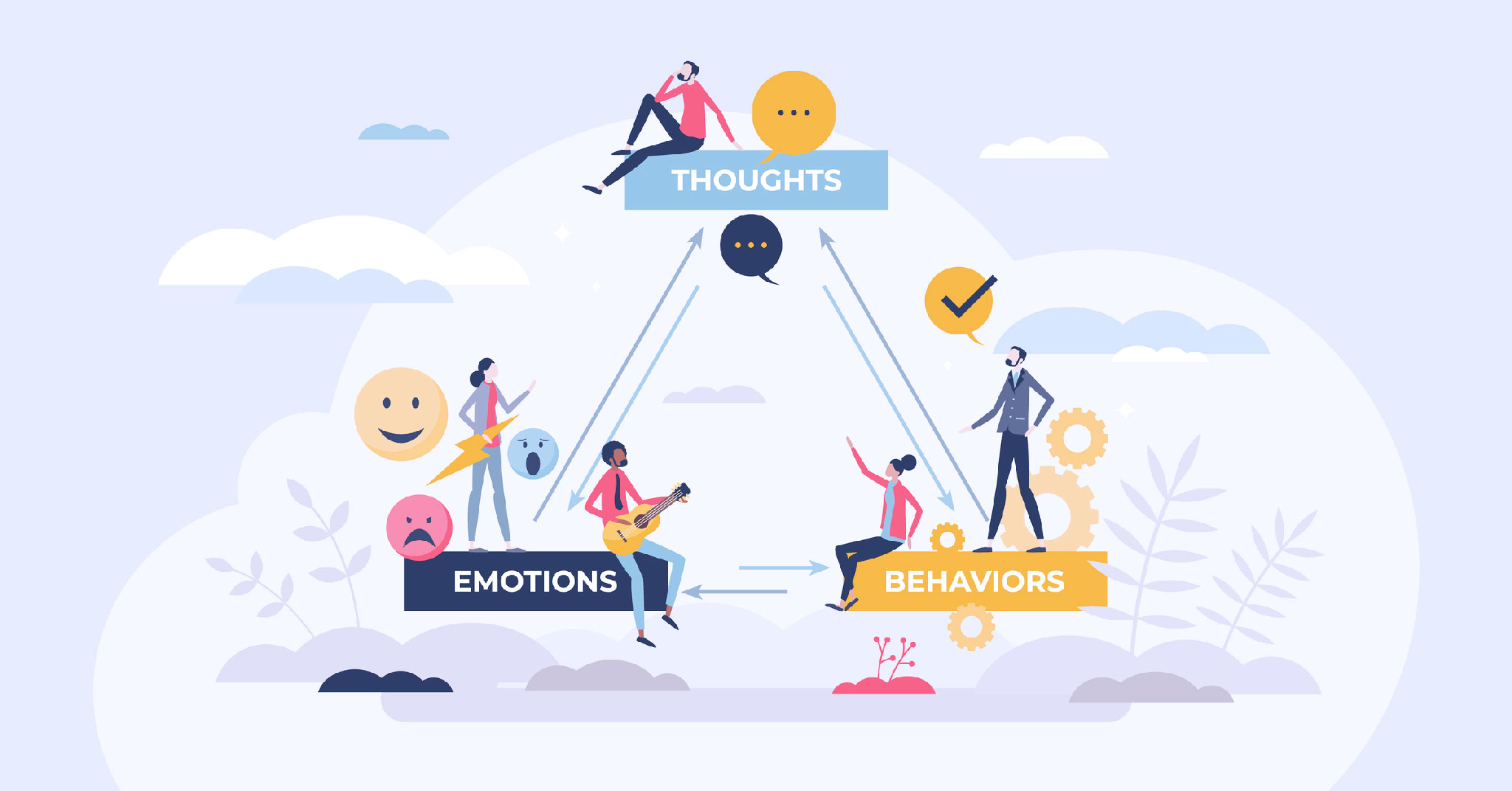
CBT is a structured, goal-oriented form of talk therapy that focuses on the powerful connection between your thoughts, emotions, and behaviors. At its core, CBT is based on the concept that our thoughts about a situation — rather than the situation itself — determine how we feel and behave. When we develop unhelpful thought patterns, these can create a cycle of negative emotions and unhelpful behavior that keeps us stuck. CBT works by helping you identify these patterns and replace them with more balanced, realistic ways of thinking, while a skilled therapist collaborates with you to recognize cognitive distortions, challenge self-held beliefs, and develop practical coping skills for daily life.
According to Luis Fraire, licensed marriage and family therapist (LMFT) at Neuro Wellness Spa in Brea, “CBT is foundational for any therapeutic practice. Clinicians benefit from its broad scope in helping individuals with their unique psychological perspectives and functioning. Clients develop a skill set that aids in the development of self-awareness and regulation that allows for a structured approach to life’s trials and tribulations.”
The therapy is typically short-term, usually lasting 12 to 20 sessions, though this can vary based on the complexity of your mental health concerns. During treatment, you’ll learn specific techniques to manage your symptoms and gain insight into the behavioral patterns contributing to your emotional challenges. This collaborative relationship is essential — you’re an active participant in your own healing process, not a passive recipient of treatment.
CBT vs. other therapies and treatments
While many effective psychological treatments exist, CBT distinguishes itself through its structured, present-focused, and practical approach. Here’s how CBT compares to other common therapeutic modalities:
| CBT vs. Other Therapies | |||
| Feature | CBT | Key approach | Best suited for |
| Cognitive behavioral therapy (CBT) | Present-day thought patterns and behaviors. | Structured, time-limited with homework assignments and skill practice. | Broad applications across many mental health conditions. |
| Traditional psychotherapy | Childhood experiences and unconscious motivations. | Less structured, explores root causes. | Understanding current problems through past experiences. |
| Dialectical behavior therapy (DBT) | Mindfulness, distress tolerance, emotion regulation. | Skills-based approach combining individual therapy, group skills training, phone coaching, and consultation team support. | Borderline personality disorder (BPD) and emotion dysregulation. |
| Interpersonal therapy | Relationship problems and life transitions. | Addresses interpersonal context of distress. | Relationship-based psychological distress. |
| ACT | Accepting uncomfortable thoughts/feelings and values-based living. | Changing relationship to thoughts and developing psychological flexibility. | Living according to personal values while managing distress. |
It’s worth noting that CBT doesn’t exist in isolation from other treatment options. Many people benefit from combining CBT with other interventions like transcranial magnetic stimulation (TMS) therapy, a non-invasive brain stimulation treatment that can be particularly effective for depression. Psychiatric medications can also work alongside CBT, with research showing that this combined approach can be especially helpful for conditions like severe depression or anxiety disorders.4
Find CBT Treatment: Cognitive Behavioral Therapy (CBT) Treatment
How Does CBT Work?
Understanding what CBT is allows you to examine the mechanisms that make it effective. Here’s how CBT works and what the CBT treatment process will include.
The cognitive model: Thoughts, feelings, and behaviors
The foundation of CBT rests on the cognitive model, which explains that our thoughts, feelings, and behaviors are deeply interconnected. This relationship works in a cycle: your thoughts influence your emotions, your emotions affect your behaviors, and your behaviors can reinforce your thoughts.
Consider an everyday example: You send a text to a friend and don’t hear back for several hours. If your automatic thought is “They’re mad at me,” you might feel anxious or sad. These negative emotions might then lead you to withdraw or avoid reaching out in the future, potentially straining the relationship and seeming to confirm your original negative thought.
Recognizing cognitive distortions
CBT helps you identify cognitive distortions, which are unhelpful thinking patterns that skew your perception of reality. Common distortions include:
- Catastrophizing: Assuming the worst possible outcome.
- All-or-nothing thinking: Viewing situations in black-and-white terms.
- Overgeneralization: Drawing broad conclusions from a single event.
- Personalization: Blaming yourself for events outside your control.
- Mental filtering: Focusing exclusively on negative details while ignoring positive ones.
As mentioned, these distorted thought patterns perpetuate a cycle, but CBT teaches you to interrupt this cycle by identifying and helping you challenge negative thought patterns before they spiral into larger emotional challenges. Through practice, you develop the ability to catch distorted thinking in real-time and choose more balanced, rational thinking patterns that lead to healthier emotional and behavioral responses.
Core CBT techniques
CBT encompasses several core principles and practical techniques that work together to create lasting change. Cognitive restructuring involves identifying negative thought patterns, examining the evidence for and against these thoughts, and developing more balanced perspectives. Your therapist helps you become aware of self-talk that may be distorted or unhelpful, then guides you through questioning these thoughts: “What evidence supports this thought? What would I tell a friend in this situation?”
Behavioral activation is particularly important for treating depression and involves identifying and scheduling activities that align with your values and goals, even when you don’t feel motivated. Additionally, exposure therapy is a key component for anxiety disorders, phobias, and post-traumatic stress disorder (PTSD) — rather than avoiding situations that trigger anxiety, you gradually and systematically confront feared situations in a safe, controlled way. This helps you learn that your feared outcomes are unlikely to occur and that you can tolerate the physical sensations and negative emotions that anxiety creates, reducing the power of these thoughts.
Thought records and self-monitoring techniques help you track your thoughts, emotions, and behaviors between therapy sessions. By documenting stressful situations and the thoughts associated with them, you develop greater awareness of your patterns and can practice applying CBT techniques in real-time, making CBT a truly skills-based approach to mental health treatment.
The structure of CBT treatment
CBT follows a structured format that makes it an efficient, short-term treatment for many mental health conditions. Sessions typically last 45 to 60 minutes and occur weekly, though frequency may be adjusted based on your needs and the severity of your symptoms.
The treatment process generally moves through three phases:
- Assessment phase: Your therapist works to understand your specific concerns, symptoms, and goals. Together, you identify the thought patterns and behavioral aspects that maintain your difficulties.
- Intervention phase: This is the active treatment phase where you learn and practice CBT techniques. Each session typically includes reviewing your progress, discussing challenges, learning new skills, and planning homework assignments.
- Maintenance phase: As you progress, sessions may become less frequent. The focus shifts to relapse prevention and ensuring you can continue using CBT skills independently.
Throughout treatment, your therapist regularly monitors your progress and adjusts the approach based on what’s working. This collaborative, goal-oriented structure means that you always know where you are in the treatment process. The skills-based nature of CBT aims to make you your own therapist eventually, equipped with tools you can use long after formal treatment ends.
Related: TMS and CBT for Anxiety and Depression
What Is CBT Used For? Conditions CBT Can Treat
The versatility of CBT makes it an effective treatment for a wide range of mental health problems. Let’s explore the specific conditions where CBT has proven particularly beneficial.
CBT for depression
Depression is often characterized by thought patterns that involve persistent negative views of yourself, your world, and your future. These automatic negative thoughts can include beliefs like “I’m worthless,” “Nothing ever works out for me,” or “I’ll always feel this way.” CBT for depression directly addresses these cognitive distortions while also tackling the behavioral patterns that maintain low mood by taking action, which helps you gradually increase engagement with meaningful activities even when motivation is low.
CBT also works to identify and challenge the negative core beliefs underlying depression. These deeply held beliefs about yourself and the world often developed from past experiences and can feel like absolute truths. Through cognitive restructuring, you learn to examine the evidence for these beliefs and develop more balanced, compassionate perspectives.
Research strongly supports CBT as an effective therapy for depression. A meta-analysis published in JAMA Psychiatry found that CBT significantly reduces depressive symptoms, with effects comparable to depression medication.5 Importantly, studies also show that people who complete CBT for depression have lower relapse rates than those treated with antidepressants alone, suggesting that the skills learned in CBT provide lasting protection against future episodes.6
CBT for anxiety disorders
Anxiety disorders share common features that CBT directly addresses: overestimation of threat, avoidance behaviors, and physical sensations that fuel worry. The therapy helps you understand how anxiety works — including the role of the fight-or-flight response — and teaches you that while anxiety feels dangerous, it isn’t actually harmful. For generalized anxiety disorder (GAD), CBT focuses on recognizing and challenging the “what if” thoughts that drive constant worry, helping you distinguish between productive problem-solving and unproductive rumination.
For social anxiety disorder, CBT takes a targeted approach to the fears that keep you from fully engaging in social situations. People with social anxiety often hold exaggerated beliefs about how negatively others perceive them, engaging in “safety behaviors” like avoiding eye contact that actually maintain anxiety. CBT helps you test these beliefs through behavioral experiments — gradually entering social situations and observing that feared outcomes rarely occur. Through exposure therapy, you systematically face social situations in a hierarchy from least to most anxiety-provoking, building confidence and reducing avoidance.
Research consistently demonstrates CBT’s effectiveness for treating anxiety. One review found that CBT produces substantial improvements across all anxiety disorders, with effect sizes indicating clinically meaningful change.3 Studies also show that gains from CBT for anxiety are well-maintained years after treatment ends.7
CBT for other mental health conditions and struggles
Beyond depression and anxiety disorders, CBT can be used to treat a host of other mood disorders and psychological problems, including:
- Obsessive-compulsive disorder (OCD): CBT for OCD, particularly a specialized form called exposure and response prevention (ERP), helps you confront obsessive thoughts without performing compulsive rituals.
- Phobias or irrational fears: Whether you’re dealing with specific phobias like fear of flying (aerophobia) or more generalized fears, CBT’s exposure-based techniques help you gradually face feared situations until they no longer trigger intense anxiety.
- Addiction or substance use disorders (SUDs): This form of addiction therapy helps you identify triggers for substance use, develop healthier coping skills for managing cravings, and challenge the thoughts that support addictive behavioral patterns.
- Post-traumatic stress disorder (PTSD): Trauma-focused CBT helps you process traumatic memories in a safe environment and challenge beliefs that developed from the trauma.
- Eating disorders or body dysmorphia: CBT addresses the distorted thoughts about body image, food, and weight that drive eating disorders while helping you develop healthier eating patterns.
- Insomnia: CBT for insomnia (CBT-I) is considered the first-line treatment for chronic sleep problems, addressing the behaviors and thoughts that interfere with healthy sleep.
One benefit of CBT is that it can be used to address psychological problems that may not meet the criteria for a clinical diagnosis but still significantly impact your quality of life, including:
- Low self-esteem: CBT helps you identify the origins of negative self-beliefs and develop more realistic, compassionate self-views.
- Relationship problems: Whether marital, professional, or social, CBT can help you recognize relationship patterns, improve communication skills, and manage the emotions that arise in interpersonal conflicts.
- Chronic pain: While CBT doesn’t eliminate physical pain, it helps you develop skills for managing the emotional and behavioral aspects of chronic pain, reducing suffering and improving functioning.
Related: Is Online Therapy Effective? Mental Health Solutions for Digital Platforms
The Benefits and Limitations of CBT
Like any therapeutic approach, CBT has both strengths and considerations to keep in mind. Understanding these can help you make an informed decision about whether CBT is the right choice for your needs.
Evidence-based advantages of CBT
CBT has one of the strongest research bases of any psychological therapy used in clinical practice, with hundreds of clinical trials demonstrating its effectiveness across diverse populations and mental health conditions. The practical, skills-based nature of CBT is particularly appealing — you learn concrete techniques like thought challenging, behavioral experiments, and problem-solving strategies that provide tangible ways to manage emotional challenges. Many people appreciate that CBT involves homework and active practice between sessions, which accelerates progress.
CBT is also notably efficient compared to some other forms of therapy. While individual experiences vary, research suggests that many people experience significant improvement within 12 to 20 sessions.8 For some conditions like specific phobias or mild to moderate depression, even briefer interventions can be effective. Research shows that CBT is notably cost-effective compared to antidepressant medication and standard care, with its time-limited structure making it more accessible than open-ended treatments.9
Perhaps most importantly, the benefits of CBT tend to last. Because you’re learning skills rather than depending on a therapist’s insights, you take these tools with you after treatment ends. Research shows that CBT has lasting preventive effects against relapse and recurrence. Studies indicate that patients relapse less frequently after completing CBT compared to those who discontinue a medication-only approach, with these protective benefits continuing after treatment ends.10
Potential limitations and considerations
While CBT is highly effective for many people, it’s important to acknowledge that no single treatment works for everyone. CBT may have limited efficacy for certain complex conditions like severe personality disorders, though it can still be a helpful component of a comprehensive treatment plan. For conditions like schizophrenia or bipolar disorder, CBT typically works best as an adjunct to psychiatric medications rather than as a standalone treatment.
The effectiveness of CBT also depends significantly on the relationship between you and your therapist, otherwise known as the therapeutic alliance. Finding the right therapist who matches your needs and communication style is crucial for success in any form of therapy. Some conditions or situations may require longer-term treatment or combined approaches, and if you’re experiencing severe depression or anxiety that significantly impairs your functioning, medication might be an important component of your treatment plan alongside CBT.
Finally, CBT requires active participation and commitment. If you’re not ready or able to complete homework assignments or practice skills between sessions, progress may be slower. The therapy asks you to examine and change long-held beliefs and behaviors, which can be uncomfortable — though this discomfort is often a sign that meaningful change is happening.
Related: Therapy for New Parents
How To Find CBT Treatment
If you’re interested in exploring CBT, several resources can help you find a qualified mental health professional:
- Professional directories: The Association for Behavioral and Cognitive Therapies (ABCT) maintains a searchable directory of CBT therapists at findcbt.org. Psychology Today’s therapist finder also allows you to filter by specialty, including CBT.
- Insurance providers: Contact your health insurance company for a list of in-network therapists who practice CBT, which can make treatment more affordable.
- Healthcare providers: Your primary care doctor can often provide referrals to mental health professionals in your area who specialize in evidence-based treatments.
- University clinics: Many universities with psychology or counseling programs operate training clinics where supervised graduate students provide CBT at reduced rates.
When contacting potential therapists, ask about their training and experience with CBT. A qualified CBT therapist should have formal training in cognitive and behavioral techniques beyond general therapy education.
Related: Psychiatrist vs. Therapist
How Neuro Wellness Spa Can Support Mental Wellness With CBT
At Neuro Wellness Spa, we understand that finding effective treatment for mental health conditions can feel overwhelming. That’s why our care team specializes in evidence-based approaches like CBT, delivered with the compassion and expertise you deserve. We know that every person’s journey with mental health is unique, and we work collaboratively with you to develop a personalized treatment plan that addresses your specific needs and goals.
Our experienced therapists integrate CBT with other innovative treatment modalities to provide comprehensive care. Whether you’re struggling with depression, anxiety, OCD, or other mental health challenges, we’re here to support you with proven therapeutic approaches. We also offer complementary treatments like TMS therapy for cases where medication and therapy alone haven’t provided sufficient relief.
You don’t have to face mental health challenges alone. Contact us today to schedule a consultation and learn how our evidence-based treatments can help you develop the skills and confidence to manage your symptoms and reclaim your emotional well-being. Taking the first step toward treatment is an act of courage, and we’re honored to support you on this journey toward healing.
FAQ: What Is Cognitive Behavioral Therapy?
Here are answers to frequently asked questions about “What is cognitive behavioral therapy?”
CBT may not be appropriate as a standalone treatment for severe conditions like active psychosis, bipolar disorder during manic episodes, or acute suicidal crises that require immediate stabilization. It’s also less suitable when someone is actively misusing substances or has cognitive impairments that prevent them from engaging in the thought-challenging work. Additionally, CBT may not be the best fit if someone prefers exploring past experiences rather than focusing on present-day patterns.
A common example is catastrophizing after receiving critical feedback at work — thinking “I’m going to get fired” or “I’m terrible at my job” based on one comment. These automatic negative thoughts trigger anxiety and may lead to behaviors like avoiding your supervisor or overworking to compensate. CBT helps you recognize this pattern, examine evidence for and against these thoughts, and develop more balanced responses like “This feedback is an opportunity to improve one skill area.”
CBT isn’t effective for everyone, and “failure” often results from factors beyond a person’s control rather than lack of effort. Common reasons include severity of symptoms requiring medication alongside therapy, poor therapeutic alliance with the clinician, or life circumstances making it difficult to complete homework assignments. Sometimes CBT simply isn’t the right therapeutic approach for an individual’s specific needs or learning style.
References
- Mental illness. (n.d.). National Institute of Mental Health (NIMH). https://www.nimh.nih.gov/health/statistics/mental-illness
- David, D., Cristea, I., & Hofmann, S. G. (2018). Why cognitive behavioral therapy is the current gold standard of psychotherapy. Frontiers in Psychiatry, 9, 4. https://doi.org/10.3389/fpsyt.2018.00004
- Hofmann, S. G., Asnaani, A., Vonk, I. J. J., Sawyer, A. T., & Fang, A. (2012). The Efficacy of Cognitive Behavioral therapy: A review of Meta-analyses. Cognitive Therapy and Research, 36(5), 427–440. https://doi.org/10.1007/s10608-012-9476-1
- Kamenov, K., Twomey, C., Cabello, M., Prina, A. M., & Ayuso-Mateos, J. L. (2016). The efficacy of psychotherapy, pharmacotherapy and their combination on functioning and quality of life in depression: a meta-analysis. Psychological Medicine, 47(3), 414–425. https://doi.org/10.1017/s0033291716002774
- Cuijpers, P., Noma, H., Karyotaki, E., Cipriani, A., & Furukawa, T. A. (2019). Effectiveness and acceptability of cognitive behavior therapy delivery formats in adults with depression. JAMA Psychiatry, 76(7), 700. https://doi.org/10.1001/jamapsychiatry.2019.0268
- Driessen, E., & Hollon, S. D. (2010). Cognitive Behavioral therapy for Mood Disorders: Efficacy, moderators and mediators. Psychiatric Clinics of North America, 33(3), 537–555. https://doi.org/10.1016/j.psc.2010.04.005
- Van Dis, E. a. M., Van Veen, S. C., Hagenaars, M. A., Batelaan, N. M., Bockting, C. L. H., Van Den Heuvel, R. M., Cuijpers, P., & Engelhard, I. M. (2019). Long-term Outcomes of Cognitive Behavioral therapy for Anxiety-Related Disorders. JAMA Psychiatry, 77(3), 265. https://doi.org/10.1001/jamapsychiatry.2019.3986
- Youn, S. J., PhD. (2018, October 23). Intensive CBT: How fast can I get better? Harvard Health. https://www.health.harvard.edu/blog/intensive-cbt-how-fast-can-i-get-better-2018102315110
- Li, M., Bai, F., Yao, L., Qin, Y., Chen, K., Xin, T., Ma, X., Ma, Y., Zhou, Y., Dai, H., Li, R., Li, X., & Yang, K. (2022). Economic Evaluation of Cognitive Behavioral Therapy for Depression: A Systematic review. Value in Health, 25(6), 1030–1041. https://doi.org/10.1016/j.jval.2021.11.1379
- Vittengl, J. R., & Jarrett, R. B. (2015). Cognitive therapy to prevent depressive relapse in adults. Current Opinion in Psychology, 4, 26–31. https://doi.org/10.1016/j.copsyc.2015.01.016