
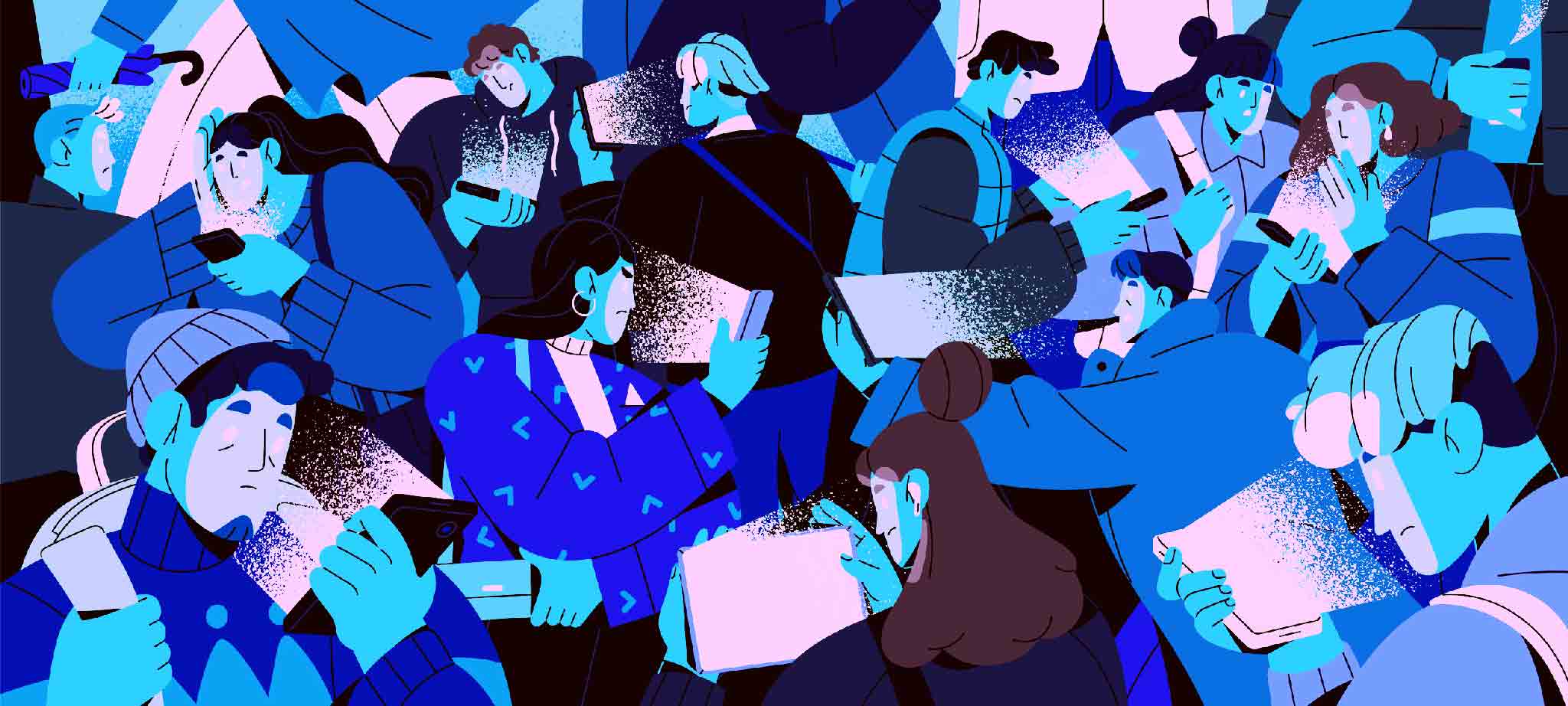
Social media has become nearly ubiquitous in modern life. In fact, a recent 2025 report by Pew Research revealed that of those aged 18 to 19, 95% use YouTube, 80% use Instagram, 68% use Facebook, and 63% use TikTok.1 Now, social media isn’t inherently a bad thing — it helps us stay connected with loved ones, provides insights into other lifestyles and cultures, and introduces us to helpful products, all while entertaining us.
However, as fun as social media can be, not setting appropriate boundaries can lead to overuse and addiction, which can take a serious toll on your mental health. These platforms, which were designed to connect with others and provide joy, are now contributing to rising rates of loneliness, depression, and anxiety. Understanding the risks of overuse can help you maintain a healthy relationship with social media (and yourself).
Our psychiatrists offer evidence-based mental health treatments and the latest psychiatric medication options through convenient online visits across California or in-person at our locations in the Los Angeles area. Schedule your appointment today.
Specific Impacts of Social Media on Different Populations
Excessive social media use impacts populations differently, from teenagers and adults to men and women.
How social media affects teenagers
Teenagers are particularly vulnerable to social media’s mental health impacts because they’re in a critical developmental period. During adolescence, teens are forming their identities, developing their worldview, and seeking approval from peers. Unlike adults, teenagers lack fully developed impulse control, decision-making skills, and emotional regulation — functions controlled by the prefrontal cortex, which doesn’t fully mature until age 25. Additionally, teen reward centers are hyperactive, making them more susceptible to the addictive pull of likes, comments, and instant validation.
This vulnerability is compounded by the fact that teens are simultaneously developing their sense of self-confidence, which can be profoundly impacted by constant FOMO, body image issues from comparison culture, cyberbullying, and stunted social skills development. Without the media literacy or emotional regulation skills to navigate these challenges, adolescents are particularly at risk for poor mental health outcomes linked to excessive social media use.
Related: Understanding and Addressing Teen Anxiety
Adults and social media mental health
Adults face distinctly different but equally serious impacts from excessive social media use. Career-related comparisons on platforms like LinkedIn can trigger anxiety about professional progress or workplace depression, with constant exposure to peers’ promotions and achievements intensifying imposter syndrome. Viewing idealized portrayals of romantic relationships and family life can create unrealistic expectations, leading to dissatisfaction with their own partnerships and parenting approaches.
For some, this constant comparison triggers midlife identity crises as they’re bombarded with reminders of aging and paths not taken. Parents face the additional challenge of managing their children’s social media use while navigating their own complicated relationship with these platforms, often feeling hypocritical about setting restrictions they themselves struggle to follow.
Related: Understanding and Supporting Depression in Women
Negative Effects: What Are 16 Negative Effects of Social Media?
Excessive social media use can have a profound effect on your mental health, impacting several brain functions. “The mental health impact of social media is less about the platforms themselves and more about how they interact with the brain’s reward, stress, and attachment systems,” according to Paul Choi, psychiatric mental health nurse practitioner (PMHNP) for Neuro Wellness Spa in Brea. “When use becomes excessive and unstructured, it can disrupt reward processing, elevate baseline stress, and reduce engagement with real-world sources of meaning and connection. Clinically, the goal is not abstinence, but restoring balance through intentional use, emotional regulation skills, and healthy boundaries.”
While excessive social media use affects mental health in numerous ways, five key impacts stand out as particularly concerning:

Here are 16 ways in which excessive social media affects mental health.
1. It’s harder to experience joy from real-life experiences
As you scroll on social media and receive notifications, your brain’s reward center releases dopamine, a neurotransmitter key to motivation, learning, and reward prediction. Social media platforms exploit this system through variable reinforcement schedules, similar to slot machines: you never know when the next like, comment, or view will come, which drives compulsive use and reinforces habit formation far more powerfully than predictable rewards.
With prolonged use, this constant stream of quick dopamine hits can blunt your brain’s sensitivity to slower, real-world rewards. Activities like meaningful conversations, exercise, creative work, or quality time with others may start to feel less engaging by comparison — even though these experiences remain essential for long-term emotional and psychological health.
2. Shortened attention span and difficulty concentrating
Social media content is getting progressively shorter. While social media isn’t the only factor contributing to declining attention spans, frequent exposure to short-form content conditions your attention to favor quick rewards over sustained focus. This makes tasks requiring patience and greater mental effort (reading a book, following complex instructions, or working on a project) feel unusually challenging. Studies show that the average attention span has declined dramatically — from 2.5 minutes in 2004 to just 47 seconds today.2
High-frequency switching between stimuli on social media is associated with reduced working memory efficiency, increased distractibility, and poorer task persistence. Research reveals that those who spend four or more hours daily on platforms like TikTok and Snapchat experienced significantly shorter attention spans and impaired memory recall.3 The constant stream of rapidly changing content weakens the executive function of your prefrontal cortex, essentially training your brain to expect instant gratification while making sustained concentration progressively more difficult.
Related: ADHD Symptoms and Management
3. Disrupted sleep
Scrolling before bed means your brain is in a heightened state of alert and stimulation at a time when you should be winding down, making it difficult to fall asleep. Additionally, prolonged exposure to blue light from your screen suppresses the sleep hormone melatonin. When algorithms are designed to maximize engagement, emotionally charged content can elevate cortisol levels and further interfere with sleep. That’s not even including the lost minutes — or hours — spent telling yourself, “One more scroll.”
4. Decreased productivity at work or school
When you haven’t gotten good sleep and your attention span is depleted from social media, it’s no wonder that work or school responsibilities feel boring by comparison and it’s more difficult to stay focused. Additionally, periods of sustained productivity are interrupted by checking notifications and brief scrolling sessions. While this may seem harmless on the surface, research shows that it takes approximately 23 minutes to regain focus after being distracted, meaning that a 30-second social media check has prolonged consequences.4
5. Elevated stress levels and emotional exhaustion
Frequent social media users are commonly exposed to graphic violence, disturbing news, and distressing content that may activate the brain’s threat system — particularly for individuals with existing anxiety, post-traumatic stress disorder (PTSD), or past trauma. For some people, the combination of FOMO, social comparison, and negative online interactions can create a state of chronic stress that interferes with the body’s natural ability to emotionally downshift and recover.
When you’re unable to mentally disengage from social media, your stress response may stay elevated rather than returning to baseline. This can leave you feeling persistently anxious, irritable, and emotionally exhausted — making it harder to focus, regulate emotions, or engage meaningfully in daily activities. Research shows that those who use social media for three or more hours daily are twice as likely to develop severe psychological distress.5
6. Social media addiction and compulsive use
Your brain is like a sponge that soaks up the information you feed it. When you’re constantly scrolling on social media, you’re effectively telling your brain that this is a priority. Over time, it becomes harder to put your phone down as your brain is constantly telling you that you need social media to be satisfied.
Related: Gaming Addiction in Teens
7. Increased self-consciousness and social anxiety
Most people post a highlight reel of their lives, which can stand in stark contrast to the everyday monotony of reality. With endless peepholes into people’s lives, social media fosters an internal feeling of inadequacy as we constantly compare ourselves to others, making even in-person interactions more difficult to navigate. Additionally, this tendency to constantly compare contributes significantly to anxiety, with 75% of studies that examine problematic social media use to heightened anxiety symptoms.6
8. Increased risk of depression
Constant online engagement may be associated with what researchers call a “dopamine deficit state” — a theoretical mechanism in which frequent dopamine spikes from social media notifications and likes could potentially desensitize reward pathways, making slower, real-world sources of joy feel less satisfying by comparison. Additionally, when social media replaces face-to-face interactions, it may reduce opportunities for oxytocin release, which some researchers theorize could be a contributing factor to depression risk.
This risk may particularly affect youth mental health, with younger people showing the highest vulnerability. Studies show that young adults who spend the most time on social media have up to three times greater odds of developing depression compared to those with minimal use,7 though the exact mechanisms underlying this association are still being researched.
Related: Understanding the Impact of Untreated Depression
9. Increased risk of developing body image issues
It’s important to remember that the image people portray online is curated, which often means filtered photos and perfect angles that perpetuate unrealistic beauty standards. It’s not uncommon for people to spend an excessive amount of time picking the perfect photo out of dozens of options, which can stand in stark contrast to the unfiltered reflection staring back at them in the mirror. This can warp your perception of self and leave you thinking you need to look like the people you see online.
10. Cyberbullying
Being on social media exposes you to the risk of online harassment, which can lead to depression, anxiety, and other mental health concerns. Teens are particularly at risk — 30% report experiencing cyberbullying at some point in their lives, with 13% having been targeted within the last 30 days. The consequences are serious: cyberbullying is linked to low self-esteem, suicidal ideation, anger, substance use, antisocial behavior, and academic struggles including school refusal.8
10. Social isolation and FOMO
Social media creates a concerning paradox: while users may have hundreds or thousands of followers with constant opportunities to connect, the quality of these interactions lacks the depth and intimacy of face-to-face ones, leaving people feeling lonely. Meanwhile, the impulse to constantly check social media keeps feeds populated with snapshots of other people’s lives (parties, vacations, and social gatherings), fueling FOMO and the illusion that everyone else is out living their best life while you’re at home scrolling. This increased visibility makes it easy to overanalyze posts from events you weren’t invited to, fostering feelings of exclusion and inadequacy.
Related: Dopamine Detox Isn’t Real, But That Doesn’t Mean You Shouldn’t Try It
11. Weakened in-person social skills
While online connections provide the illusion of socializing, virtual interactions aren’t an adequate substitute for in-person connection. The more you rely on digital communication, the more intimidating face-to-face interaction becomes, and your real-world social skills decline from lack of practice.
Additionally, algorithms are designed to maximize engagement by showing you content that aligns with your existing beliefs, creating an echo chamber. When your feed constantly reinforces perspectives you already agree with, encountering differing opinions in real life can feel jarring, leaving you unprepared to navigate disagreement or engage in productive conflict.
13. Decision fatigue and analysis paralysis
The online landscape contains overwhelming amounts of information, which complicates even the simplest decisions, like where to eat. Just as you’re about to commit to one restaurant, a flood of easily accessible reviews tells you why it might not be the best choice — or why somewhere else is better. Combined with the constant micro-decisions required during mindless scrolling (Should I like this? Should I post that? What should I comment?), this increases cognitive exhaustion, procrastination, and an eventual surrender to whatever takes the least amount of effort.
14. Decreased creativity
When your consumption-creation pipeline skews too far in favor of consuming, creativity naturally suffers. Creativity requires downtime — mental space to daydream, make unexpected connections, and develop original ideas. When these moments are instinctively filled with scrolling, your brain never enters the state where creative thinking thrives. This problem is compounded by algorithmic echo chambers: similar content gets pushed to millions of people simultaneously, creating a homogenized landscape where everyone draws from the same narrow pool of ideas rather than diverse, unexpected sources of inspiration.
Related: 10 Resolutions That Support Emotional Well-Being
15. Relationship strain and jealousy
Social media can breed jealousy and suspicion in relationships. A seemingly benign “like” on someone’s photo can be interpreted as micro-cheating, while viewing endless highlight reels of other couples’ perfect relationships creates unrealistic expectations that make normal conflict feel like relationship failure. Additionally, social media provides unlimited access to potential affair partners — whether through reconnecting with exes, sliding into DMs, or simply being reminded that other options exist — making emotional and physical infidelity more accessible than ever.
16. Struggles to be present and mindful
Constant notifications train your brain to find moments of stillness intolerable, making you reach for your phone at the slightest hint of boredom. Maintaining flow states (those periods of deep focus and immersion) becomes nearly impossible. With smartphones ubiquitous, many people now approach life as content creators, documenting experiences rather than living them and observing rather than participating. The result is a diminished capacity to be fully present, making it harder to connect authentically with the people and moments in front of you.
Related: Holistic Treatments for Depression
The Positive Side: Benefits When Used Mindfully
Social media use isn’t all bad. When used mindfully and with appropriate boundaries, it can be a valuable resource for information, connection, and entertainment. Some examples of the positive effects of social media include:
- Connection and community building: You can build communities around shared hobbies or interests, finding peer support, comfort, and even lifelong friendships with people who understand your experiences.
- Maintaining long-distance relationships and friendships: When loved ones move away, social media provides an easy way to stay connected despite physical distance.
- Access to mental health resources and education: Social media can raise awareness about mental health issues, with peer support groups, educational content, and services readily available online — particularly beneficial for people who are chronically ill, disabled, or live in areas with limited access to care.
- Platforms for creative expression: Social media offers creatives an opportunity to share their work with expansive audiences, potentially generate revenue from their art, and receive feedback from supporters.
- Professional networking and collaboration: Platforms like LinkedIn allow professionals to connect with peers, discover job opportunities, and collaborate across geographic boundaries.
Related: Best Treatments for Anxiety
Protecting Your Mental Health From Social Media Dangers
Despite these risks, social media remains a fundamental part of life for many people. Setting healthy boundaries and appropriate limits can help you maintain a positive relationship with online spaces while protecting your mental wellbeing.
Recognizing social media addiction signs
Social media addiction contributes to anxiety, depression, irritability, and loss of self-control. Watch for these warning signs so you can adjust your usage before it becomes problematic:
- Compulsive checking: Feeling the need to access social media first thing in the morning, during meals, or even while spending time with friends and family in person.
- Social withdrawal: Avoiding face-to-face interactions because they feel too difficult or you simply prefer connecting online.
- Neglecting responsibilities: Allowing social media to take priority over work, school, household tasks, or personal obligations.
- Relationship strain: Constantly comparing your relationships to idealized online personas or setting unrealistic expectations based on what you see online.
- Using social media as your primary coping mechanism: Instinctively turning to scrolling whenever you experience difficult emotions or stress.
- Physical symptoms: Experiencing sleep disruption, eye strain, difficulty concentrating, reduced attention span, or frequent headaches.
Practical strategies for healthy social media use
Several strategies can help you develop a healthier relationship with social media, including:
- Setting digital boundaries: Designate specific times for social media use and set timers or app limits to remind you when it’s time to log off — and stick to them!
- Curating your feed: Follow accounts that make you feel confident, inspired, or educated. Unfollow, hide, or block any accounts that trigger negative emotions or comparisons.
- Consuming mindfully: Before opening social media, ask yourself, “Why am I going on right now?” Whether it’s to connect with friends or decompress after a stressful day, set a time limit that aligns with that intention. This helps you approach social media use more intentionally rather than mindlessly scrolling.
- Prioritizing real-world connections: Make in-person activities and relationships the priority, and commit to putting your phone away during these moments to be fully present.
- Taking regular digital detoxes: Schedule planned breaks from social media — even just for an evening or a weekend — to reset your relationship with technology and reconnect with offline experiences.
Creating a social media detox plan
Some people might benefit from a social media detox if they feel like their social media use is approaching unhealthy levels.
Short-term strategies for a social media detox:
- Weekend social media breaks: Take occasional 48-hour breaks from all platforms, ideally during activities like camping or travel where you’re naturally engaged with your surroundings.
- Evening digital curfews: Set a specific time to stop using social media each night, which can simultaneously improve your sleep quality.
- Replacing scrolling with intentional activities: When you feel the urge to scroll, choose a mindful alternative like reading, puzzles, journaling, or calling a friend.
- Using app timers and digital wellness tools: Enable media screen time limits and app blockers built into your phone to enforce boundaries.
Long-term strategies for sustaining a healthier relationship with social media:
- Developing intrinsic self-worth: Work on building confidence and identity independent of likes, comments, and online validation.
- Building offline support systems: Invest time in face-to-face friendships, hobbies, and communities that provide fulfillment without screens.
- Learning to tolerate stillness: Practice sitting with boredom and uncertainty without immediately reaching for your phone as a distraction.
- Establishing technology-free zones: Designate certain spaces (like bedrooms or dining areas) and times (like meals or the first hour after waking) as phone-free.
Related: AI Companions and Mental Health
How Neuro Wellness Spa Can Support Healthier Relationships With Social Media
Social media isn’t inherently harmful, but without proper boundaries, it can contribute to mental health issues and impact quality of life. If you’ve recognized problematic patterns in your own social media use but find it difficult to make changes on your own, professional support can make all the difference.
At Neuro Wellness Spa, our mental health professionals offer goal-oriented therapy sessions using evidence-based strategies like cognitive behavioral therapy (CBT) and dialectical behavior therapy (DBT) to help you develop a healthier relationship with technology. Our therapists can work with you to create a personalized social media detox plan and establish sustainable boundaries that fit your lifestyle.
Don’t let social media continue to compromise your well-being and real-life connections. Contact Neuro Wellness Spa today to take the first step toward reclaiming your time, attention, and mental health.
FAQ: How Does Social Media Affect Mental Health?
Here are answers to some frequently asked questions about how social media affects mental health.
Social media is mentally draining because it requires hundreds of micro-decisions (like, scroll, comment, share) that deplete your cognitive resources, while constant switching between stimuli reduces working memory efficiency and increases mental fatigue. The platforms exploit your brain’s reward system through unpredictable dopamine hits, which can desensitize you to slower, real-world activities and leave you feeling emotionally exhausted. Additionally, exposure to social comparison, FOMO, disturbing content, and negative interactions keeps your stress response elevated, interfering with your ability to emotionally recover and making it harder to focus or engage meaningfully in daily life.
Teenagers and young adults (ages 13 to 25) are most affected by social media’s mental health impacts. Adolescents are particularly vulnerable because their prefrontal cortex — which controls impulse control, decision-making, and emotional regulation — isn’t fully developed until age 25, while their reward centers are hyperactive, making them more susceptible to social media’s addictive pull. This developmental vulnerability, combined with the pressures of identity formation during this critical period, leaves teens at heightened risk for anxiety, depression, body image issues, and cyberbullying.
You might want to consider a social media break if you notice these signs, including:
– Compulsively checking your phone first thing in the morning or constantly throughout the day.
– Feeling anxious, irritable, or inadequate after scrolling.
– Neglecting work, relationships, or responsibilities to stay online.
– Experiencing sleep problems, difficulty concentrating, or eye strain.
– Avoiding face-to-face interactions because they feel too scary or difficult.
– Using social media as your primary way to cope with stress.
References
- Author, N. (2025, December 22). Social media fact sheet. Pew Research Center. https://www.pewresearch.org/internet/fact-sheet/social-media/
- Nussenbaum, T. (2026, January 7). Social media causes attention spans to drop. The Standard. https://standard.asl.org/27705/uncategorized/social-media-causes-attention-spans-to-drop/
- Poles, A. (2025). Impact of social media usage on attention spans. Psychology, 16(06), 760–772. https://doi.org/10.4236/psych.2025.166042
- Forbes: “Brain-Based Tips For Sharpening Your Focus” (Gloria Mark cited) | Informatics @ the University of California, Irvine. (n.d.). https://www.informatics.uci.edu/forbes-brain-based-tips-for-sharpening-your-focus-gloria-mark-cited/
- Mougharbel, F., Chaput, J., Sampasa-Kanyinga, H., Hamilton, H. A., Colman, I., Leatherdale, S. T., & Goldfield, G. S. (2023). Heavy social media use and psychological distress among adolescents: the moderating role of sex, age, and parental support. Frontiers in Public Health, 11, 1190390. https://doi.org/10.3389/fpubh.2023.1190390
- Kerr, B., Garimella, A., Pillarisetti, L., Charlly, N., Sullivan, K., & Moreno, M. A. (2024). Associations between social media use and anxiety among Adolescents: A Systematic review study. Journal of Adolescent Health, 76(1), 18–28. https://doi.org/10.1016/j.jadohealth.2024.09.003
- Lin, L. Y., Sidani, J. E., Shensa, A., Radovic, A., Miller, E., Colditz, J. B., Hoffman, B. L., Giles, L. M., & Primack, B. A. (2016). ASSOCIATION BETWEEN SOCIAL MEDIA USE AND DEPRESSION AMONG U.S. YOUNG ADULTS. Depression and Anxiety, 33(4), 323–331. https://doi.org/10.1002/da.22466
- Cyberbullying Research Center. (2024, September 12). Cyberbullying Facts – Cyberbullying Research Center. https://cyberbullying.org/facts